Testmo is a genuinely well-built unified test management platform. It combines manual test case management, exploratory testing sessions, and automation result reporting in one clean interface, with BDD support and a fast, keyboard-driven UI that handles large repositories better than most.
The pricing structure is where teams start comparing. Team is $99/month for 10 users, Business is $399/month per 25 users, and Enterprise is $599/month per 25 users, with 15% off on annual billing.
The detail that catches teams out is what sits in which tier. The Reporting Center, the analytics layer most teams are actually buying Testmo for, is a Business feature. So is role-based access control. SSO and audit logs are Enterprise-only. A twelve-person team on the Team plan gets test management and automation results, but not the reporting.
Even on Business, the reporting layer focuses on test case status and milestone progress rather than failure intelligence. There is no AI failure classification, no trace viewer, no error grouping, and no quality gates on pull requests.
Teams running Playwright in CI want more than test case organization. They want to know why tests fail, which ones are flaky, and what to fix first without clicking through individual test runs.
Here are the 7 best Testmo alternatives to consider in 2026.
Best Testmo Alternatives: How to Choose the Right Tool
We evaluated each tool based on test management depth, test reporting and analytics, AI failure analysis, flaky test detection, CI/CD integration, Playwright support, and pricing transparency at real team sizes.
How to Compare Testmo Alternatives
Here is a quick comparison of the best alternatives to Testmo that can help you identify your preferred test reporting tool.
TestDino | Testmo | TestRail | Qase | Xray | |
|---|---|---|---|---|---|
| PricingLowest paid plan, per the listed billing terms. | $39/month (billed annually) | $99/month (Team, up to 10 users) | $37/user/month (Professional) | $24/user/month (Startup, annual) | From $100/year (up to 10 Jira users) |
| Best for | Playwright cloud companion & test management | Unified manual + exploratory + automation management | Enterprise test case management & traceability | Modern test management with transparent pricing | Jira-native BDD & requirements traceability |
| Playwright integration | Native (trace viewer, error grouping, MCP) | CLI reporter (first-class) | Via reporter plugin + case IDs | Via reporter plugin | Via JUnit XML parsing |
| One-step CI setup | One reporter line, streams live | CLI command, not zero-config | Plugins/CLI + case IDs in code | Reporter + API token | JUnit XML upload via API |
Dashboards & Reporting | |||||
| Unified Playwright dashboard | Automation results view | ||||
| Multi-tab test run detail | Summary, History, AI Insights & more | Run detail view | Run views (no PW tabs) | Run detail view | Jira issue view |
| Pull request insightsSee test results and history for each pull request. | |||||
| Test ExplorerBrowse tests as a hierarchy, a flat list, or by tag. | Folders and tags | Suites, sections, tags | Suites and tags | Jira JQL based | |
| Real-time streaming | Per-shard/worker | ||||
| Scheduled PDF reportsGet report PDFs emailed on a set schedule. | Daily/Weekly/Monthly | Scheduled via email | Export and share | ||
Test Analytics | |||||
| Analytics: trends & patterns | Reporting Center (Business tier) | Milestone and run reports | Configurable dashboards | Jira gadgets | |
| Code coverage, per-file | Istanbul, run-level | ||||
| Environment analytics | Pass-rate/flaky by env | Configurations field | Via custom fields/configs | Via configurations | Via attributes |
Debugging & Evidence | |||||
| Built-in Playwright trace viewer | |||||
| Screenshots & video replay | Embedded | Attachments, no native replay | Via attachments | Via attachments | If attached to Jira |
| Console logs | Node + browser | Via attachments | Via attachments | Via attachments | |
| Visual diff comparison | |||||
| Smart error grouping | Message/stack/location | Flaky/slow grouping | Defect grouping | ||
| Flaky detectionSpot tests that pass and fail inconsistently, with a stability score. | Root cause classification | Flaky flag (no root cause) | Flaky flag (no root cause) | ||
| Playwright tags & annotations | Priority/owner/links/metrics | Tags and fields | Custom fields | Custom fields | |
CI/CD Optimization | |||||
| GitHub CI Checks quality gates | Per-env + mandatory tags | Via webhooks | |||
| Branch → environment mappingMatch each Git branch to the environment it runs against. | Exact/regex | Via configurations | Via configurations | Via environments | |
| Sharded / parallel run support | Per-shard live view | Via CLI merge | |||
| Native CI breadth | GitHub, GitLab, Azure DevOps, Bitbucket, CircleCI, Jenkins, TeamCity, AWS CodeBuild, Buildkite, Harness | Major CI providers | Jenkins, GitHub Actions, GitLab CI, CircleCI, Azure DevOps, Bitbucket | GitHub, GitLab, Jenkins, CircleCI | Jenkins, GitLab, GitHub Actions, Bamboo |
| Self-managed GitLab | |||||
Test Management | |||||
| Test case management | Jira issue types | ||||
| Bulk test creationGenerate many test cases at once from PRDs, Jira, or user stories. | via MCP | Testmo AI generation | CSV/XML import | CSV import + AIDEN AI | CSV import |
| Release trackingGroup test results by release, cycle, or sprint. | Milestones | Milestones | |||
| Exploratory / manual sessions | Dedicated module | ||||
| Import / export test cases | JSON/CSV/ZIP | CSV | CSV/XML | CSV/XML | CSV |
AI & Automation | |||||
| Local MCPLet AI coding assistants in your editor act on test data directly. | Cursor/Claude Code/Copilot | ||||
| Remote MCPLet web-based AI tools query your test data. | |||||
| AI test run summary on GitHub PRs | GitHub/GitLab/Slack | ||||
| AI test suite auditAI scores your test suite and gives a downloadable report. | |||||
| AI failure classification | 4 categories with confidence | Testmo AI (generation, not triage) | Sembi IQ (limited scope) | AIDEN (generation, not triage) | |
Integrations & Collaboration | |||||
| Bug tracking breadth | Jira, Linear, Asana, monday | Jira, GitHub, GitLab, Linear | Jira, monday, Asana, etc. | Jira, GitHub, GitLab, Asana | Native Jira |
| Slack notifications | App + webhooks | Via webhooks | Via integrations | ||
Platform & Security | |||||
| Public API & CLIs | REST + @testdino/playwright | REST API + Testmo CLI | REST API (180-300 req/min) | REST API + qasectl | REST API |
| Project-level AI controls | Per-feature toggles | Admin toggles | |||
| Compliance & certifications | ISO 27001, SOC 2 Type II, GDPR | AWS/Azure infra; no own SOC 2 | SOC 2, ISO, SSO (Ent) | SOC 2 Type II, GDPR | ISO 27001, SOC 2 |
Plans & Pricing | |||||
| Plan tiers | Free · Pro $39 · Team $79 · Enterprise | Team $99/10 users · Business $399/25 users · Enterprise $599/25 users | Professional $37/seat · Enterprise $74/seat | Free · Startup $24 · Business $30 · Enterprise | Tiered by Jira user count · Standard · Advanced |
| Free executions | 5,000/mo | 14-day trial | Free trial (14-30 days) | Free up to 3 users | 30-day trial |
| Support | Email (Pro) · Priority (Team) · Slack Connect (Enterprise) | Email · Fast premium (Bus/Ent) | Standard (Pro) · Priority 2-hr SLA (Ent) | Email + chat on paid tiers | Email + Xray Enterprise support |
| Try for free | Learn more | Learn more | Learn more | Learn more | |
Best Testmo Competitors for Test Reporting
Here are the 7 best alternatives to Testmo for teams that want deeper test reporting alongside management.
1. TestDino
Best for:
Playwright-first teams that need test reporting, test management, and CI/CD optimization in one platform, without stitching multiple tools together.
Platform Type:
Test reporting, dashboards, test management, and CI observability platform for Playwright
Integrations with:
GitHub Actions, GitLab CI, Azure DevOps, Bitbucket, CircleCI, Jenkins, TeamCity, AWS CodeBuild, Buildkite, Harness, Jira, Linear, Asana, monday, Slack
Key Features:
 Test management and automated reporting in one place
- AI failure classification into 4 categories with confidence scores
- Built-in trace viewer with DOM snapshots and network logs
- Error grouping by message, stack trace, and location
- GitHub CI Checks as merge quality gates
- MCP Server for AI agent queries from your IDE
- Flaky test detection with root cause classification
- AI summaries posted to GitHub commits and GitLab MRs
- Real-time results streaming via WebSocket
- Code coverage per file breakdown

Pros
- Pro from $39/month (billed annually), analytics included on every plan
- Playwright-native with under 10-minute setup
- Test management and automated reporting on the same platform
- Broad CI/CD support: GitHub Actions, GitLab CI, Azure DevOps, Bitbucket, CircleCI, Jenkins, TeamCity, AWS CodeBuild, Buildkite and Harness
- AI summaries posted to GitHub commits, GitLab MRs, and Slack
- 1-click bug filing into Jira, Linear, Asana, or monday

Cons
- Purpose-built for Playwright (multi-framework support on the roadmap)
First Hand Experience
Testmo provides clean test case management with a well-designed repository view for organizing folders, tests, and results side by side. The exploratory testing module and automation reporting via CLI work well for teams that need all three testing types in one place. It is a better-built product than most of its price bracket.
Two gaps appear as Playwright suites scale. The first is commercial: the Reporting Center is a Business-tier feature at $399/month per 25 users, so the analytics layer is not in the plan most small teams start on.
The second is depth. Even with the Reporting Center, there is no AI failure classification to separate real bugs from flaky tests, no trace viewer to replay DOM state per action, no error grouping to cluster related failures, and no merge-blocking quality gates.
TestDino fills that gap, and its analytics are not tier-gated. AI Insights classifies every failure into Actual Bug, UI Change, Unstable Test, or Miscellaneous. Error grouping clusters related failures by message and stack trace, so a list of 60 failed tests reduces to a handful of distinct root causes.
Test management and automated reporting live on the same platform. Manual test cases sit in suites up to 6 levels deep with ownership, custom fields, and version history. The Test Explorer shows manual and automated tests side by side, sortable by flaky rate, tags, and coverage status.
Debugging That Saves You from Re-running Locally
Each failed test in TestDino comes with screenshots, video, browser console logs, and a trace you can step through action by action. Available right after the CI run finishes.
Testmo stores attachments against a test result, which means you can find a screenshot if your CI uploaded one. It does not give you a replayable trace with DOM state at each action. Bug filing in TestDino is 1 click into Jira, Linear, Asana, or monday, pre-filled with error details, stack trace, failure history, and links to the run and CI job.
CI/CD Speed and Merge Safety
Each shard reports as its tests finish. History persists across different CI runners.
GitHub CI Checks add quality gates to your PRs. Set a minimum pass rate, mark critical tags as mandatory, and configure different rules per environment. AI-generated summaries post to GitHub commits and GitLab merge requests with pass/fail/flaky counts. Testmo handles this through generic webhooks, which means building the gate logic yourself.
Flaky Test Detection That Tells You Why
Flaky test detection classifies unstable tests by root cause: timing related, environment dependent, network dependent, or assertion intermittent. Each test gets a stability percentage, and you can compare flaky rates across environments to spot infrastructure problems rather than chasing test code.
Real-Time Streaming and Scheduled Reports
Results appear on the dashboard as each test completes via real-time streaming, not after the full suite finishes. Automated PDF reports deliver test health summaries on daily, weekly, or monthly schedules. Slack notifications send run summaries filtered by environment and branch.
MCP Server for AI-Assisted Workflows
The MCP Server connects your AI assistant (Cursor, Claude Code, Copilot) to your test data. List test runs, pull debugging context, perform root cause analysis, and manage manual test cases through natural language.
Final Verdict
Testmo organizes your testing. TestDino tells you why tests fail and what to fix first.
If your team has outgrown Testmo's reporting depth, or you have priced out the Business tier just to get the Reporting Center, TestDino adds AI classification, error grouping, a hosted trace viewer, and CI/CD quality gates from the first run, with analytics included at every paid tier.
Pricing & Value
TestDino's Pro plan is $39/month billed annually ($49 monthly) for 3 users and 10,000 test results, roughly a tenth of the Business tier where Testmo's Reporting Center lives. Team is $79/month billed annually ($99 monthly) for 30 users.
2. Qase
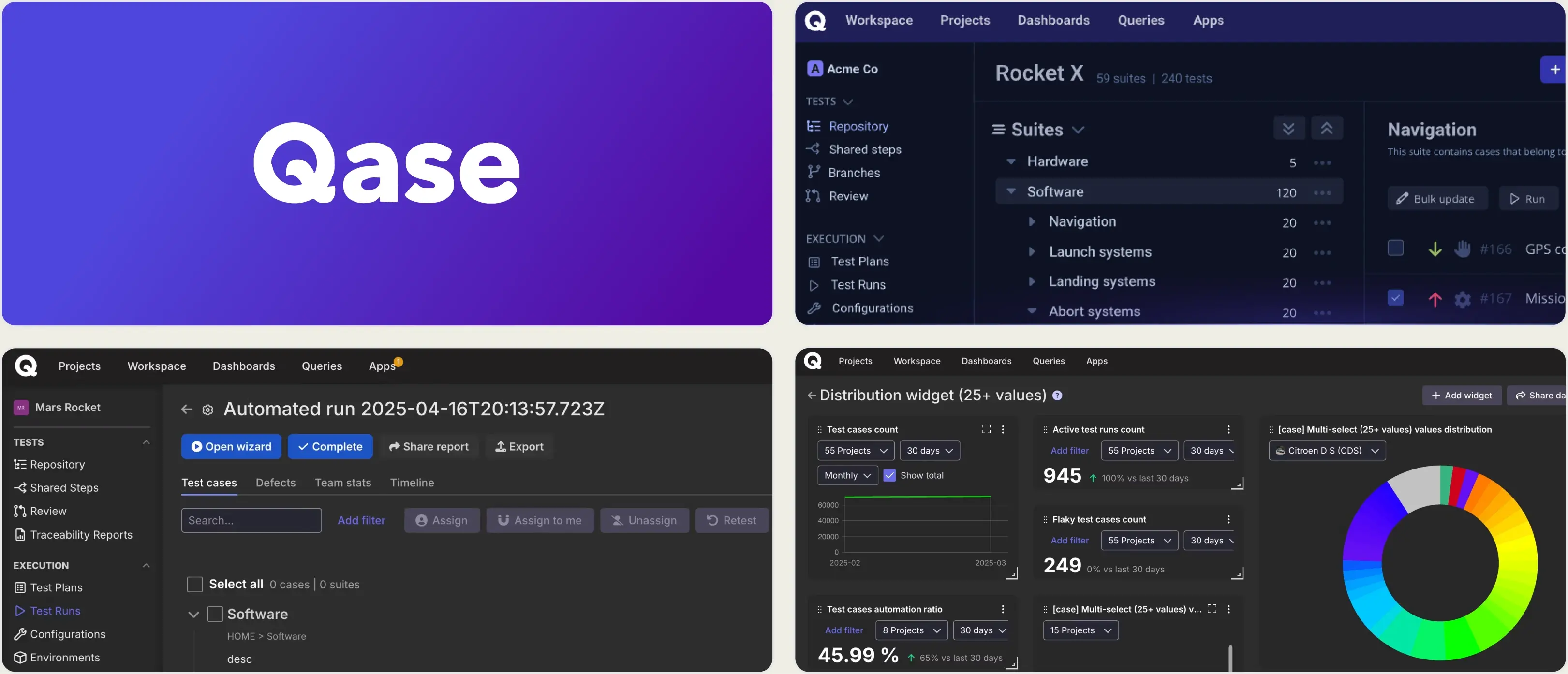
Best for:
Agile teams that want a modern Testmo alternative with per-user pricing that starts lower and a genuinely free tier for small teams.
Platform Type:
Modern cloud-based test management platform
Integrations with:
Jira, GitHub, GitLab, Asana, Slack, Playwright, Cypress, Selenium
Key Features:
- Clean, fast interface with shared steps and parameterization
- Built-in defect management and two-way Jira sync
- AIDEN AI for test case generation
- Reporters for Playwright, Cypress, and most major frameworks
- Configurable dashboards and run reports
- REST API and qasectl CLI for automation
Pros
- Free for up to 3 users, where Testmo is trial-only
- Startup at $24/user/month is cheaper than Testmo below about 4 users
- Dashboards are included on paid tiers, not gated behind a higher plan
- Published pricing with no sales call required
Cons
- Per-user pricing overtakes Testmo's flat Team plan as headcount grows
- SSO is a paid add-on rather than included
- No trace viewer, error grouping, or root cause flaky analysis
- Enterprise tier requires a 20-user minimum
First Hand Experience
Qase is the most direct like-for-like comparison to Testmo, and the choice usually comes down to team size arithmetic rather than features.
Below roughly four users, Qase Startup at $24 per user is cheaper than Testmo's $99 flat Team plan. Above ten, Testmo's flat tier wins until you need the Reporting Center, at which point Business at $399 per 25 users flips the maths back toward Qase. Model your actual headcount before deciding.
On capability, the two are close. Both do manual cases, both ingest automation results, both have an AI feature aimed at test generation rather than failure triage. Qase includes dashboards on all paid tiers, which is a real advantage over Testmo's tier-gated Reporting Center. Testmo has the better exploratory testing module.
Neither gives you Playwright debugging evidence. No embedded trace viewer, no DOM snapshots, and flaky detection is a flag rather than a root cause.
Pricing & Value
Free for up to 3 users. Startup at $24/user/month and Business at $30/user/month, both billed annually. Enterprise is custom with a 20-user minimum. SSO is a $4/user/month add-on on Business.
Final Verdict
Qase is the strongest conventional Testmo alternative, especially for small teams that benefit from the free tier or want dashboards without a tier upgrade. Playwright teams still need a reporting layer on top.
3. TestRail
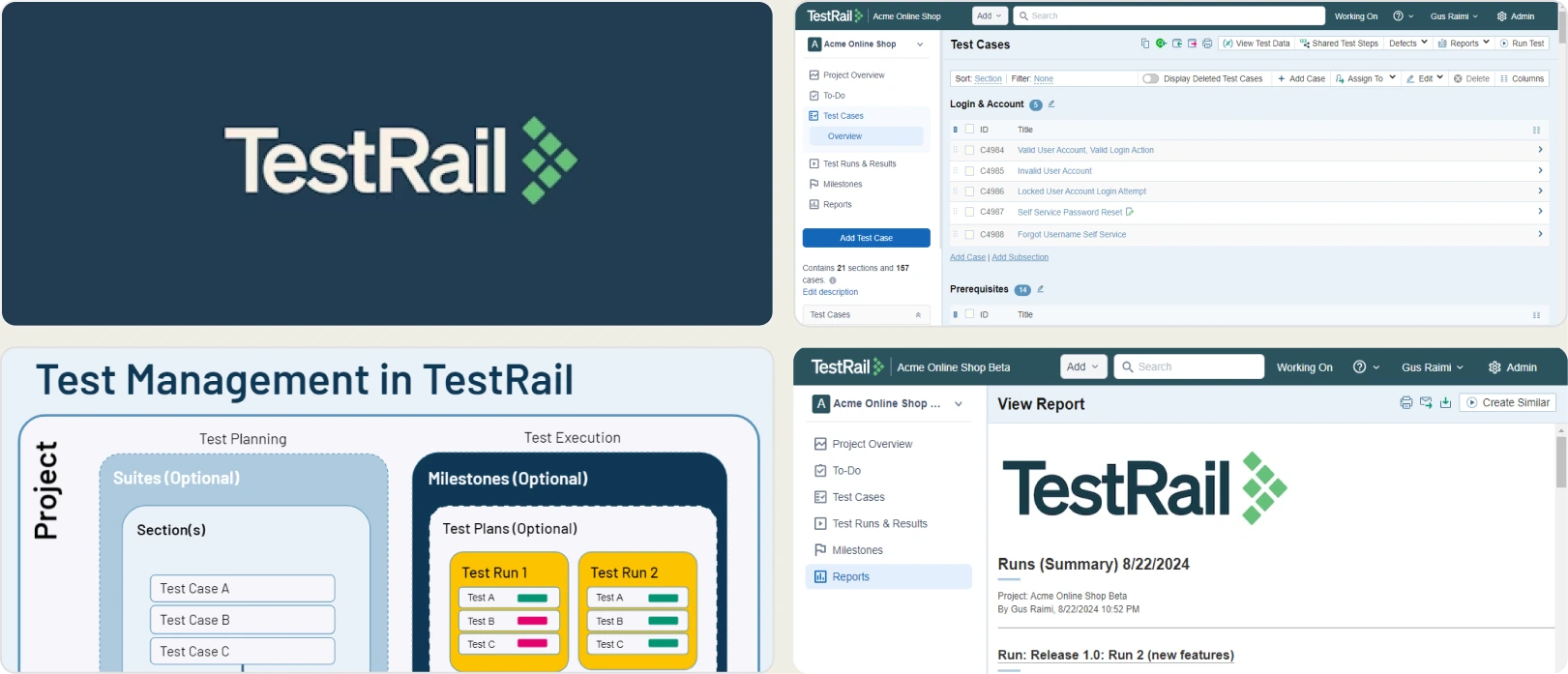
Best for:
Teams formalizing QA with test cases, plans, and audit trails alongside CI/CD runs.
Platform Type:
Test case management platform (cloud or self-hosted)
Integrations with:
Jira, GitHub, GitLab, Jenkins, Azure Pipelines
Key Features:
- Test case organization with plans and milestones
- Requirements and defect traceability
- API and CLI to push automated results
- SSO, auditing, and version history
- Native issue links to Jira and GitLab
Pros
- Well-established tooling with clear structure and extensive documentation
- Many CI/CD options and integration guides
- Enterprise controls for access and audit
- Self-hosted deployment available, which Testmo does not offer
Cons
- $37/seat/month Professional and $74/seat/month Enterprise, with two price rises since 2025
- Automated results require case IDs embedded in your test code
- Administrative setup takes real time
- Focused on management, with limited test analytics
First Hand Experience
TestRail delivers structure once workflows are defined. Rollouts typically start with a taxonomy exercise for sections, naming, and milestones, followed by CI result ingestion. The result is dependable status and coverage views for audits.
Where it loses to Testmo is the automation link. TestRail expects case IDs embedded in your automation code, so every rename or file move breaks the link and creates duplicates. Testmo's CLI reporter is meaningfully less fragile.
Where it wins is deployment flexibility and integration maturity. Self-hosting is available, and almost every CI tool has a documented TestRail integration.
Cost is the sticking point. Per-seat pricing at $37 means a 15-person team pays more than Testmo's Business tier, and TestRail has raised prices in both August 2025 and August 2026.
Pricing & Value
$37/seat/month (Professional), $74/seat/month (Enterprise, annual billing only). Per-seat pricing with no free tier.
Final Verdict
TestRail fits teams that need formal test case management with audit trails or self-hosting. For teams that prioritize failure analysis and automation link stability, Testmo and the tools below offer more value per dollar.
4. Testomat.io
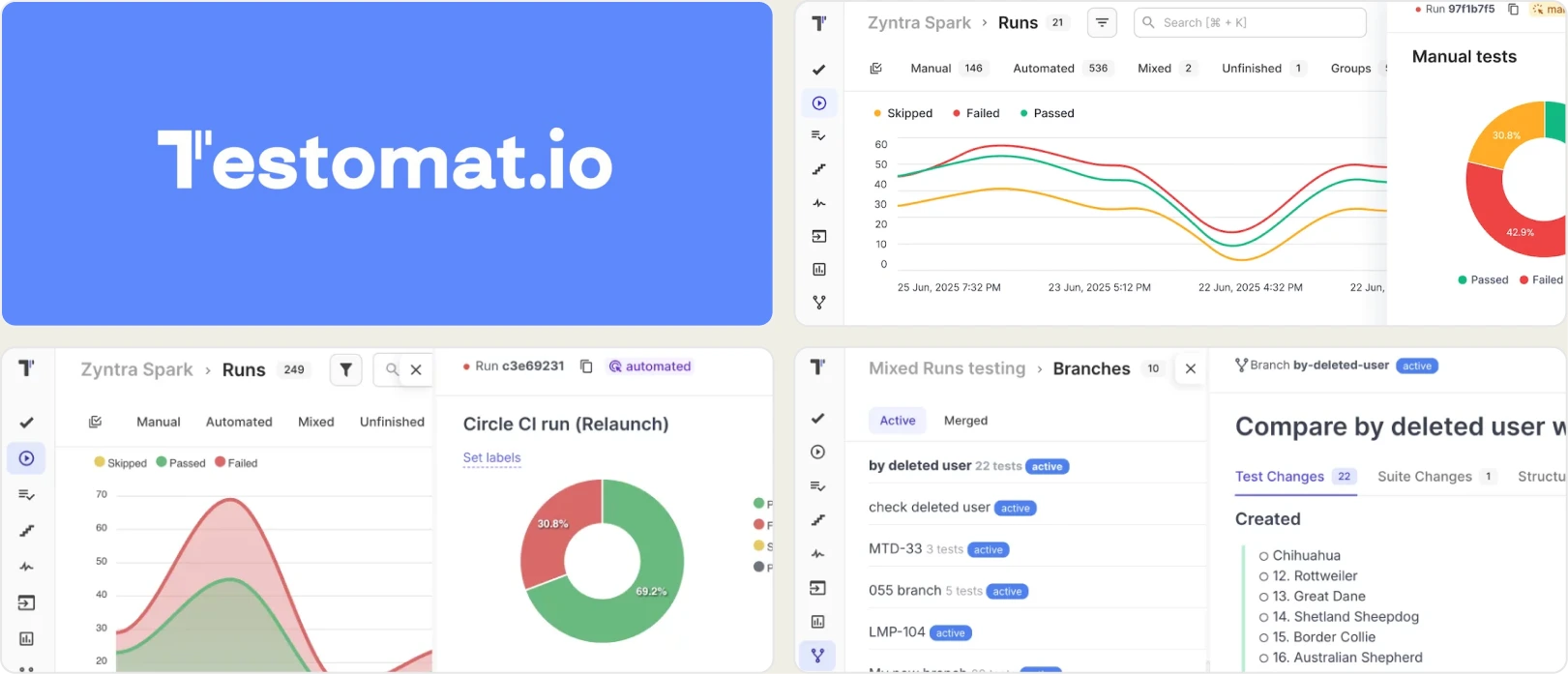
Best for:
QA teams syncing manual and automated tests in one workspace on a tight budget.
Platform Type:
Cloud test management platform
Integrations with:
Jira, GitHub, GitLab, Jenkins, CI/CD pipelines
Key Features:
- Manual and automated test case management
- Real-time run results with heatmaps
- Flaky test auto-tagging from run history
- BDD and Gherkin support with living documentation
- CI/CD triggered test execution
- Native Playwright reporter
Pros
- Cheapest paid entry point here at $30/user/month
- Free tier for 2 users and 2 projects
- Native Playwright reporter rather than a generic CLI
- Clean UI with fast onboarding
Cons
- Limited failure analysis and root cause depth
- Reporting focused on test case status
- No built-in trace viewer or evidence panel
- Smaller company and community than Testmo or TestRail
First Hand Experience
Testomat.io organizes manual and automated tests in a clean workspace with folder structures, tags, and run history. It integrates with Playwright, Cypress, and other frameworks through a native reporter, and flaky tests get auto-tagged based on run history.
For small teams, the price difference against Testmo is significant. Two or three users on Testomat.io costs a fraction of Testmo's $99 flat minimum, and the free tier lets you evaluate properly first.
BDD support with living documentation is genuinely good, and better integrated than most tools at this price. What you do not get is failure intelligence. Flaky auto-tagging tells you a test is unstable without telling you why, and there is no trace viewer or error grouping.
Pricing & Value
Free tier for 2 users and 2 projects. Pro from $30/user/month on annual billing. Enterprise custom.
Final Verdict
Testomat.io is a solid budget Testmo alternative with better Playwright reporter integration than most. For teams focused on failure analysis and Playwright debugging depth, evaluate whether test case management alone meets your reporting needs.
5. Xray
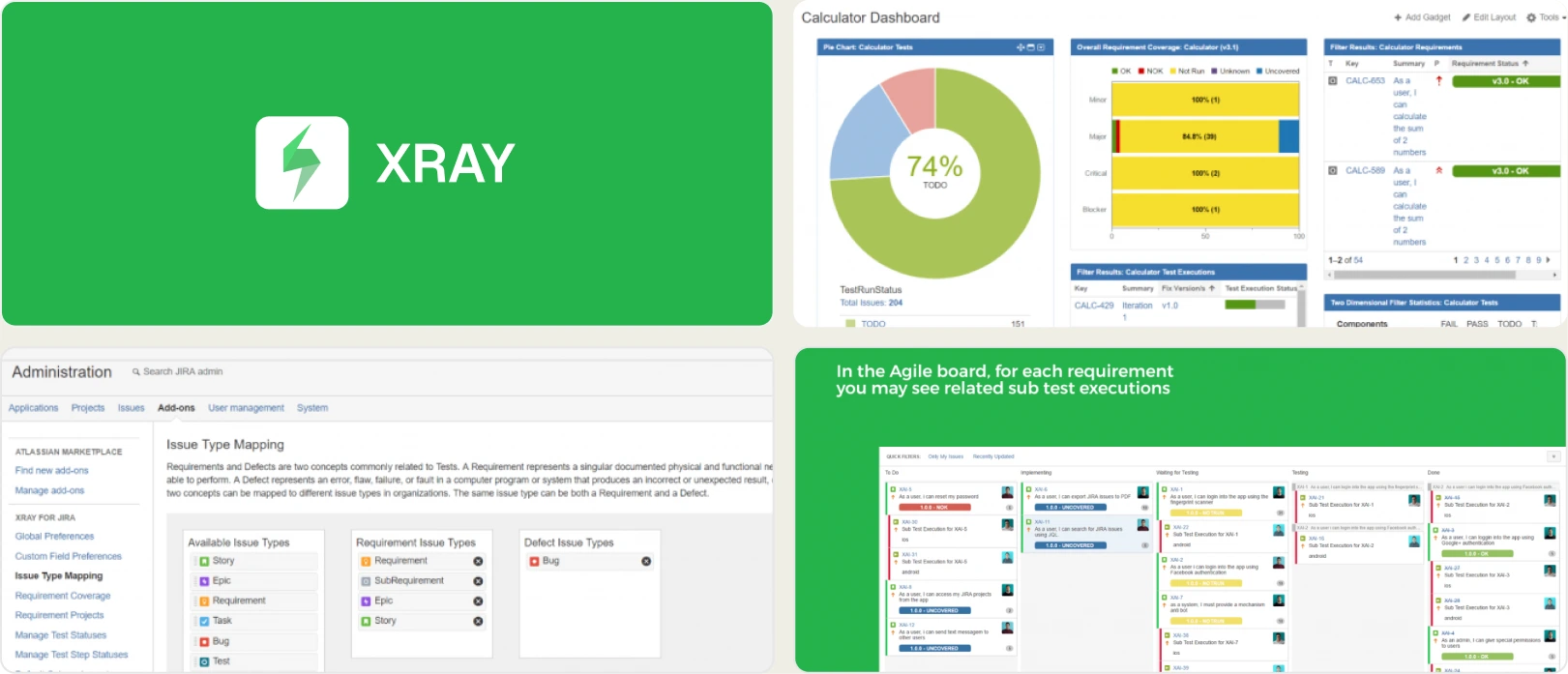
Best for:
Teams using Jira that want test management inside their existing workflow with full requirements traceability.
Platform Type:
Jira-native test management app
Integrations with:
Jira (native), Jenkins, GitLab, GitHub Actions, Cucumber, Robot Framework
Key Features:
- Test cases managed as native Jira issues
- Test plans and execution tracking
- Requirements coverage charts and traceability matrices
- CI result import via REST API
- BDD and Cucumber scenario support
- Parameterized and data-driven testing
Pros
- Native Jira integration with zero context switching
- Cheapest entry on this list at $100/year for small Jira instances
- Deep requirement-to-defect traceability
- Strong fit for BDD and Cucumber workflows
Cons
- Billed against total Jira user count, not QA headcount
- Clutters Jira with thousands of test issue types
- Reporting depth depends on Jira gadgets
- No failure analysis or flaky test detection
First Hand Experience
Xray turns Jira into a test management tool. Test cases, test plans, and test executions all live as Jira issues, which gives you traceability Testmo cannot match.
The pricing model needs understanding before you commit. Marketplace apps are licensed against the size of your Jira instance, not the number of people using the app. With 100 Jira users and 5 QA engineers you pay for 100, at roughly $6.33 per user per month on Standard. Against Testmo's flat $99 for 10 users, that arithmetic can go either way.
The trade-off is Jira clutter and reporting ceiling. Each test execution creates Jira artifacts that bloat large instances, and analysis is limited to what Jira gadgets can render.
Pricing & Value
From $100/year for up to 10 Jira users. Roughly $6.33/user/month (Standard) and $7.60/user/month (Advanced) from 11 users, billed against total Jira instance size.
Final Verdict
Xray is the right Testmo alternative for Jira-native teams that need requirements traceability. For standalone Playwright reporting or failure intelligence, tools built outside Jira provide more depth.
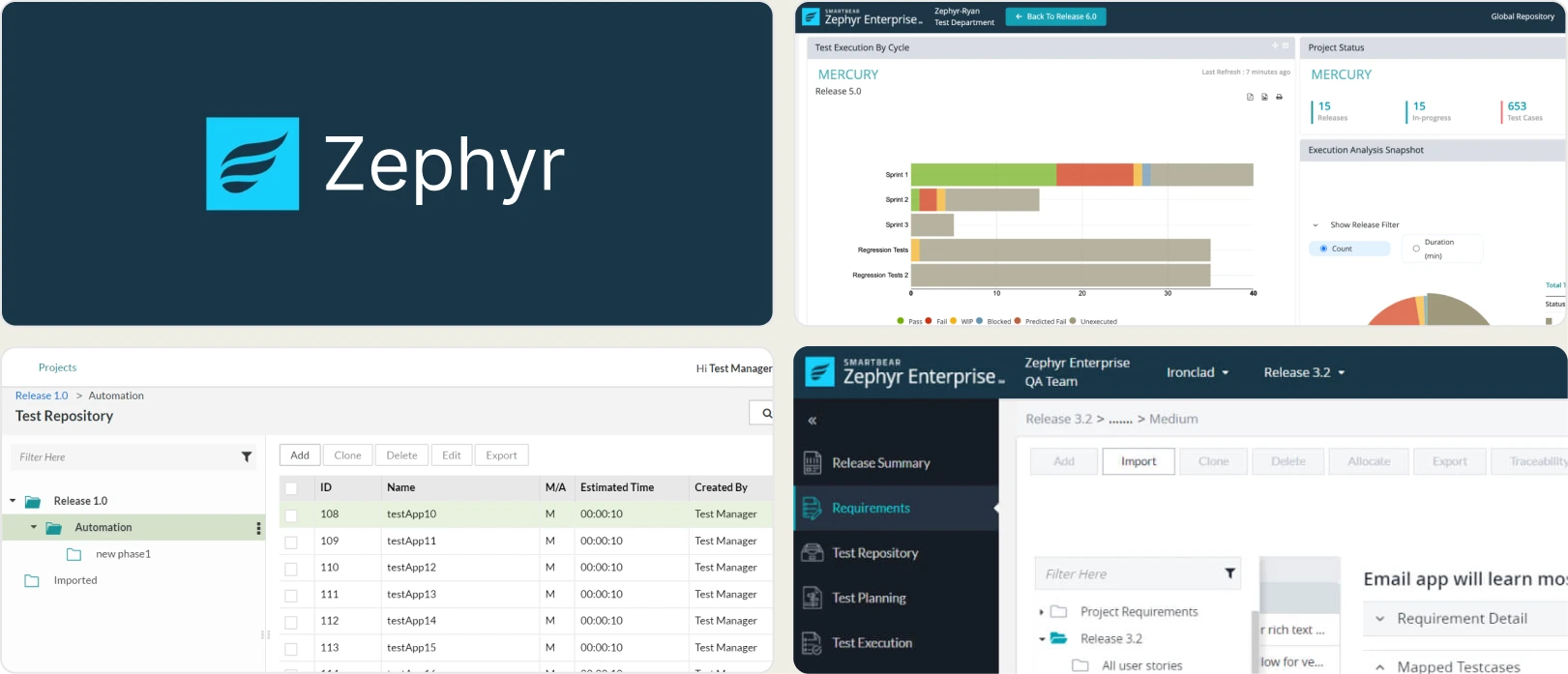
6. Zephyr Scale
Best for:
Jira teams that want a folder-based test library without turning every test case into a Jira issue.
Platform Type:
Jira-native test management app
Integrations with:
Jira (native), Jenkins, Bamboo, GitHub Actions, JUnit, Cucumber
Key Features:
- Structured, folder-based test library inside Jira
- Reusable test steps and parameters
- Test execution cycles and version tracking
- Traceability to Jira requirements
- Cross-project reporting and Jira dashboard gadgets
- REST API for CI/CD integration
Pros
- Free for Jira instances of 10 or fewer users
- Folder structure maps cleanly onto Testmo's repository model
- Avoids the Jira issue bloat that Xray creates
- Strong reporting gadgets for Jira dashboards
Cons
- Tied entirely to Jira
- Also billed against total Jira user count
- Automation integration limited to XML result parsing
- No test analytics or failure intelligence
First Hand Experience
Zephyr Scale is the closest structural match to Testmo inside Jira. Both use a folder-based repository rather than issue-per-test, so teams migrating keep the same mental model for organizing suites.
The free tier for Jira instances of 10 or fewer users is the standout commercial fact. For a small team already paying for Jira, test management effectively costs nothing, against Testmo's $99 monthly minimum.
Reporting relies on Jira gadgets and dashboard widgets. Teams that need standalone test analytics, failure classification, or Playwright-specific reporting will outgrow what a Jira add-on provides.
Pricing & Value
Free for up to 10 Jira users. From $10/month (Standard) and $15/month (Advanced) for small instances, scaling in Atlassian Marketplace tiers. Zephyr Enterprise is quote-based with a 20-user minimum.
Final Verdict
Zephyr Scale is a practical, very cheap Testmo alternative for Jira teams, especially under 10 users. For deeper test intelligence or framework-specific analytics, standalone platforms provide more depth.
7. PractiTest
Best for:
QA teams that need requirements traceability, compliance reporting, and structured test governance.
Platform Type:
Cloud-based enterprise test management platform
Integrations with:
Jira, Jenkins, GitHub, GitLab, Azure DevOps, Selenium, REST API
Key Features:
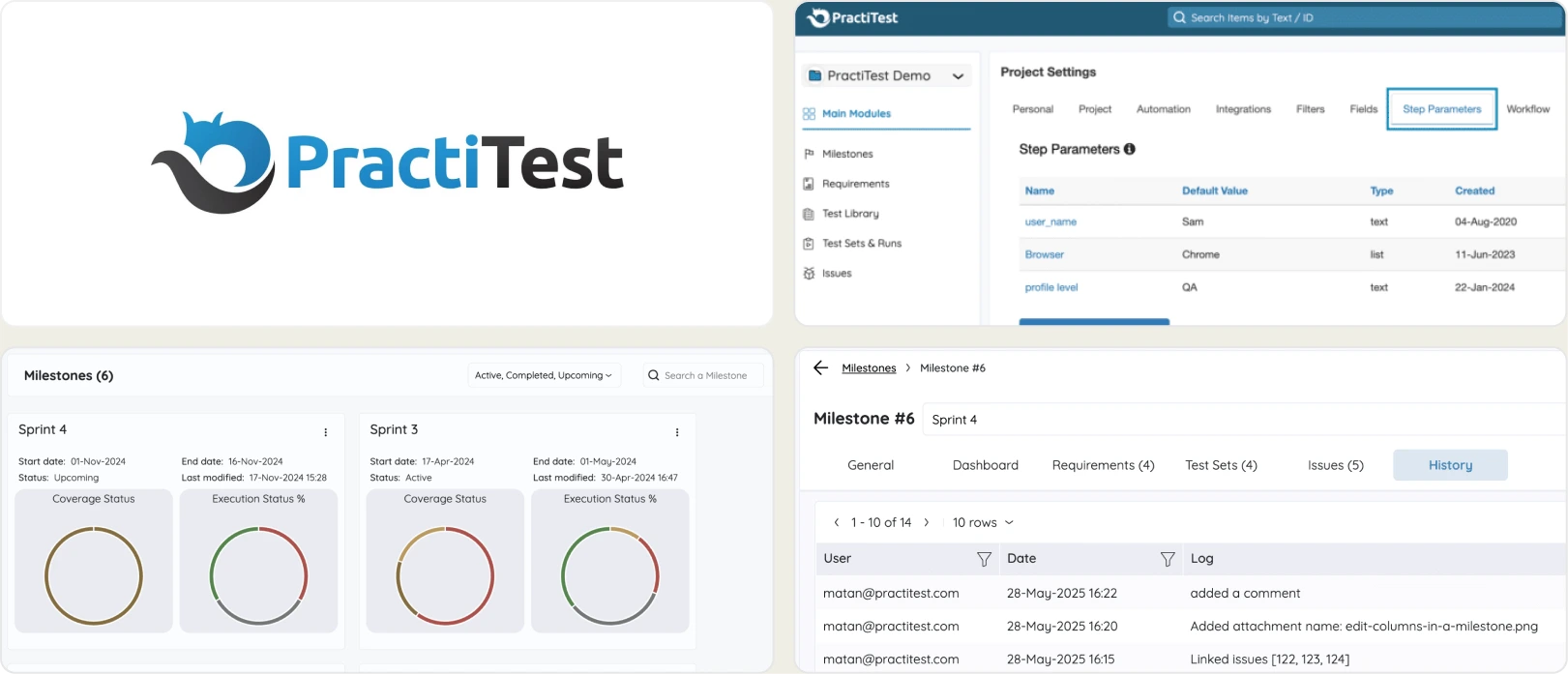
- End-to-end requirements traceability with visual dashboards
- SmartFox AI for test prioritization and risk-based testing
- Custom fields and hierarchical filters for large repositories
- Exploratory testing with session-based management
- Compliance-oriented reporting for regulated industries
- REST API for automation result uploads
Pros
- Strong traceability across requirements, tests, and defects
- Flexible custom fields and filtering that scale to large repositories
- SmartFox AI helps prioritize high-risk test areas
- Reliable customer support and onboarding
Cons
- Per-user pricing from around $47/user/month with a 5-user minimum
- No built-in test analytics or failure analysis
- Interface can feel dated and heavy for smaller teams
- Automation reporting stays at pass/fail level
First Hand Experience
PractiTest competes with Testmo on governance rather than developer experience. Its filter-based data model handles very large repositories more gracefully than folder trees, and the compliance reporting is stronger than anything Testmo offers.
SmartFox AI adds risk-based prioritization, suggesting which areas to test first based on historical defect patterns. That is planning intelligence rather than failure intelligence, and worth being precise about when comparing AI claims.
The cost structure is the obstacle for small teams. A 5-user minimum at around $47 per user means a floor near $235 per month, well above Testmo's $99 entry tier for twice the users.
Pricing & Value
From around $47/user/month (Team, 5-user minimum), with Corporate tiers quoted based on seat count and a 10-user minimum. Annual billing required on higher tiers.
Final Verdict
PractiTest fits QA teams in regulated industries that prioritize traceability and governance. For teams that need test analytics and failure insights alongside management, a governance-first tool leaves the harder half unsolved.
What to Look for in a Testmo Alternative
Testmo provides clean, unified test management. The question is whether test case organization alone is enough, or whether your team also needs failure intelligence and CI/CD optimization on top of it.
Failure intelligence beyond pass/fail reporting
Testmo shows test run summaries and milestone progress, and the Reporting Center adds trend charts on the Business tier. None of it tells you why tests fail. AI failure classification, error grouping, and flaky test detection with root cause categories turn raw results into a prioritized fix list.
Be precise when comparing AI claims here. Testmo AI and Qase's AIDEN generate test cases. That is authoring assistance, not triage. Classifying a failure as a real bug versus a UI change versus an unstable test is a different capability, and only one tool on this list does it.
Debugging evidence attached to every failure
Testmo stores attachments per test result, but there is no built-in trace viewer, no video playback, and no console log capture per test. Playwright teams need more than attachments. Trace viewers that replay DOM state per action, screenshots at the point of failure, and console logs cut debugging time significantly.
If your debugging workflow requires re-running tests locally to understand failures, the reporting tool is not capturing enough context.
CI/CD optimization that reduces pipeline time
Testmo integrates with CI/CD pipelines for result reporting and exposes webhooks. It does not add merge-blocking quality gates or AI summaries on commits and pull requests, so building that logic falls to your team.
Look for platforms that support minimum pass rates on PRs, mandatory tag checks, environment-specific merge rules, and shard-aware live results. These features go beyond reporting results to acting on them inside the developer workflow.
Test management with native test linking
Testmo connects automation results through its CLI tool, which holds up better than TestRail's approach of embedding case IDs in your codebase. It is still an integration layer you configure and maintain.
Look for platforms where manual and automated tests connect in the UI without code-level dependencies or CLI maintenance. The fewer integration layers between your test management and automated results, the less your team carries.
Pricing that matches your actual team shape
Testmo's tiers are the thing to model carefully, because the analytics you want may not be in the plan you can afford. Team is $99/month for 10 users, but the Reporting Center starts at Business, $399/month per 25 users. SSO and audit logs start at Enterprise, $599/month per 25 users.
Compare that against per-user models at your real headcount. Qase Startup is $24/user/month, TestRail Professional is $37/seat, Testomat.io is $30/user, and PractiTest starts near $47/user with a 5-user minimum. Xray and Zephyr Scale are billed against total Jira user count, not QA headcount, which is cheap for small Jira instances and expensive for large ones. Plan-based pricing with published user caps lets you budget for stakeholders and occasional contributors up front.
Wrapping Up
Testmo provides clean unified test management with manual, exploratory, and automation reporting in one platform. For teams that need structured test case organization with milestone tracking, it is one of the better-built tools in its bracket.
But when the question shifts from "what is the status of our tests?" to "why did they fail and what should we fix first?", the reporting stops short. And the analytics layer that partly answers the first question sits behind the $399/month Business tier.
Qase is the closest like-for-like swap with a free tier and untiered dashboards. TestRail adds audit trails and self-hosting. Testomat.io is the cheapest entry with a native Playwright reporter. Xray and Zephyr Scale are very cheap for small Jira instances. PractiTest covers compliance-grade governance.
For Playwright-first teams that want AI failure classification, test management, flaky test detection with root causes, and CI/CD quality gates in one platform, TestDino's Pro plan starts at $39/month billed annually ($49 monthly) for 3 users with analytics included, and a Free plan covers 5,000 test results a month.
Scale QA with Clear Failure Insights
Classify failures automaticallyReduce CI re-run timeFAQs
Testmo combines manual test case management, exploratory testing sessions, and automation result reporting in a single platform with a unified Reporting Center. Its exploratory testing module is stronger than most alternatives here, and its CLI reporter links automation results without requiring case IDs in your code. Most alternatives focus on either management or reporting, not all three testing types.