Compare Argos vs TestDino side by side. TestDino ships embedded Playwright traces, AI error grouping, and flat pricing. Argos focuses on visual regression.
Argos is a visual regression testing tool. It captures screenshots across builds, detects pixel changes, and provides a baseline approval workflow. TestDino handles Playwright test intelligence, error grouping, and inline debugging for functional failures. It groups errors by root cause, ships an embedded Playwright trace viewer on every failure, and ties each run to its pull request with a dedicated Pull Request view.
TestDino goes well past reporting. The platform also comes with built-in test management designed for how engineering works in 2026. Test cases live alongside their run history, manual runs and exploratory sessions roll up under date-bound releases, and the entire test record (cases, failures, traces, and verdicts) is queryable by Claude Code, Cursor, or any MCP-compatible agent, so your AI coding tools are not debugging blind.
Argos has its own focus. TestDino optimizes your CI/CD test suite and AI agent workflows.
Ease of setup
One npm package, one environment variable, and your first Playwright run lands a full dashboard. There is no separate uploader CLI or complex setup. The reporter handles it end-to-end.
Full failure context in one view
Every failed test opens with an embedded trace viewer showing screenshots, video playback, and error groups by message, stack trace, and location. Debugging happens in the test reporter rather than CI logs.
MCP-native test access
The TestDino MCP Server lets Cursor and Claude Code work directly with your Playwright test history. Agents debug failures with full trace context, rank flaky tests, and update manual cases through create_manual_test_case straight from the editor.
Flat pricing that does not scale per screenshot
Argos charges based on screenshot volume, which scales linearly as you add tests. TestDino charges a flat $39/month billed annually for up to 3 users with 10,000 executions included, making it highly predictable for growing engineering teams.

Purely visual focus
Argos does not provide functional test intelligence to classify logic failures like API timeouts, database errors, or setup issues. When functional tests fail, you still read text logs in CI.
No inline trace viewer
Argos shows side-by-side screenshot comparisons, but it does not embed the native Playwright trace viewer. To debug network calls, console logs, or step-by-step actions of a failed run, you download traces from CI and open them locally.
Missing test suite analytics
It lacks features like cross-run flakiness trends for functional failures or granular suite-wide health metrics for your entire Playwright run.
No MCP server for AI agents
AI coding agents like Cursor or Claude Code cannot query test runs or debug functional test failures directly from the IDE, as Argos lacks an MCP server.
| | |
|---|---|---|
| Pricing (starts at) | $39/month (billed annually) | Varies by tier / users* |
| Best for | Playwright test intelligence & management | Visual Regression Testing |
| Playwright integration | Native (trace viewer, error grouping, MCP) | Via reporters |
| One-step CI setup | ||
DASHBOARDS & REPORTING | ||
| Unified Playwright dashboard | ||
| Multi-tab test run detail | Summary, History, AI Insights & more | Dashboards |
| Pull request insights | ||
| Test Explorer | Browse tests as a hierarchy, a flat list, or by tag. | Build and screenshot list |
| Real-time streaming | Per-shard/worker | |
| Scheduled PDF reports | Daily/Weekly/Monthly | |
TEST ANALYTICS | ||
| Analytics: trends & patterns | For test runs, test cases & more | Visual diff history per build |
| Code coverage, per-file | Istanbul, run-level | |
| Environment analytics | Pass-rate/flaky by env | |
DEBUGGING & EVIDENCE | ||
| Built-in Playwright trace viewer | ||
| Screenshots & video replay | Embedded | As attachments |
| Console logs (per test) | Node + browser | Via attachment |
| Visual diff comparison | ||
| Smart error grouping | Message/stack/location | |
| Flaky detection | ||
| Playwright Tags and Annotations | Attach priority, owner, links, and metrics to tests. | Not applicable (visual regression tool) |
CI/CD OPTIMIZATION | ||
| Rerun only failed tests | ||
| GitHub CI Checks quality gates | Per-env + mandatory tags | |
| Branch → environment mapping | Exact/regex | |
| Smart rerun history | ||
| Sharded / parallel run support | Per-shard live view | Supported |
| Native CI breadth | GitHub, GitLab, Azure DevOps, TeamCity, Bitbucket, CircleCI, Jenkins | Framework agnostic |
| Self-managed GitLab | ||
TEST MANAGEMENT | ||
| Test case management (suites, ownership) | ||
| Bulk test creation (PRDs/Jira/stories) | via MCP | |
| Release tracking (releases/cycles/sprints) | ||
| Exploratory/manual sessions | ||
| Import/export test cases | JSON/CSV/ZIP | |
AI & AUTOMATION | ||
| Local MCP (IDE agents) | Cursor/Claude Code/Copilot | |
| Remote MCP (web AI) | ||
| AI test run summary on GitHub PRs | ||
| AI test suite audit (audit score + report) | ||
| AI failure classification | ||
INTEGRATIONS & COLLABORATION | ||
| Bug tracking breadth | Jira, Linear, Asana, monday | GitHub / GitLab PR checks |
| Slack notifications (run summaries) | App + webhooks | |
PLATFORM & SECURITY | ||
| Public API & CLIs | REST API + CLI | REST API |
| Project-level AI controls | Per-feature toggles | |
| Compliance & certifications | ISO 27001, SOC 2 Type II, GDPR | |
PLANS & PRICING | ||
| Plan tiers | Free, Pro, Team, Enterprise | Free, Pro, Enterprise* |
| Free executions | 5,000/month | 5,000 screenshots |
| Support | Chat + Slack Connect + Priority email | Email (Pro support on paid plans) |
| Start for Free | Visit Argos | |
Feature-by-feature breakdown showing how each tool handles the areas that matter most to testing teams.
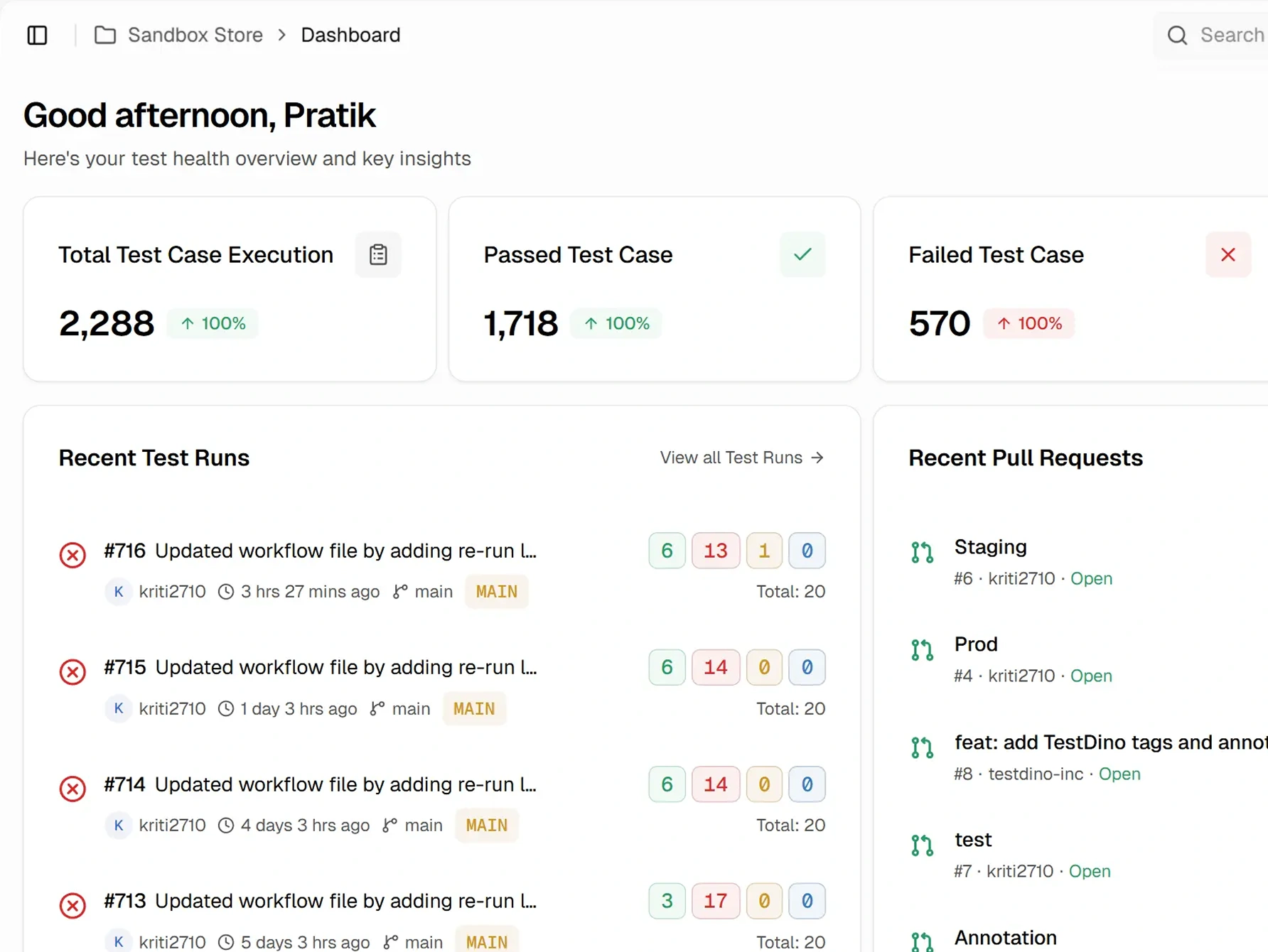
Argos offers a dedicated visual review dashboard built around pull requests. It alerts your team when screenshot diffs are detected, so reviewers can approve or reject visual changes. It does not provide functional run metrics, slow test tracking, or sharded run detail pages.
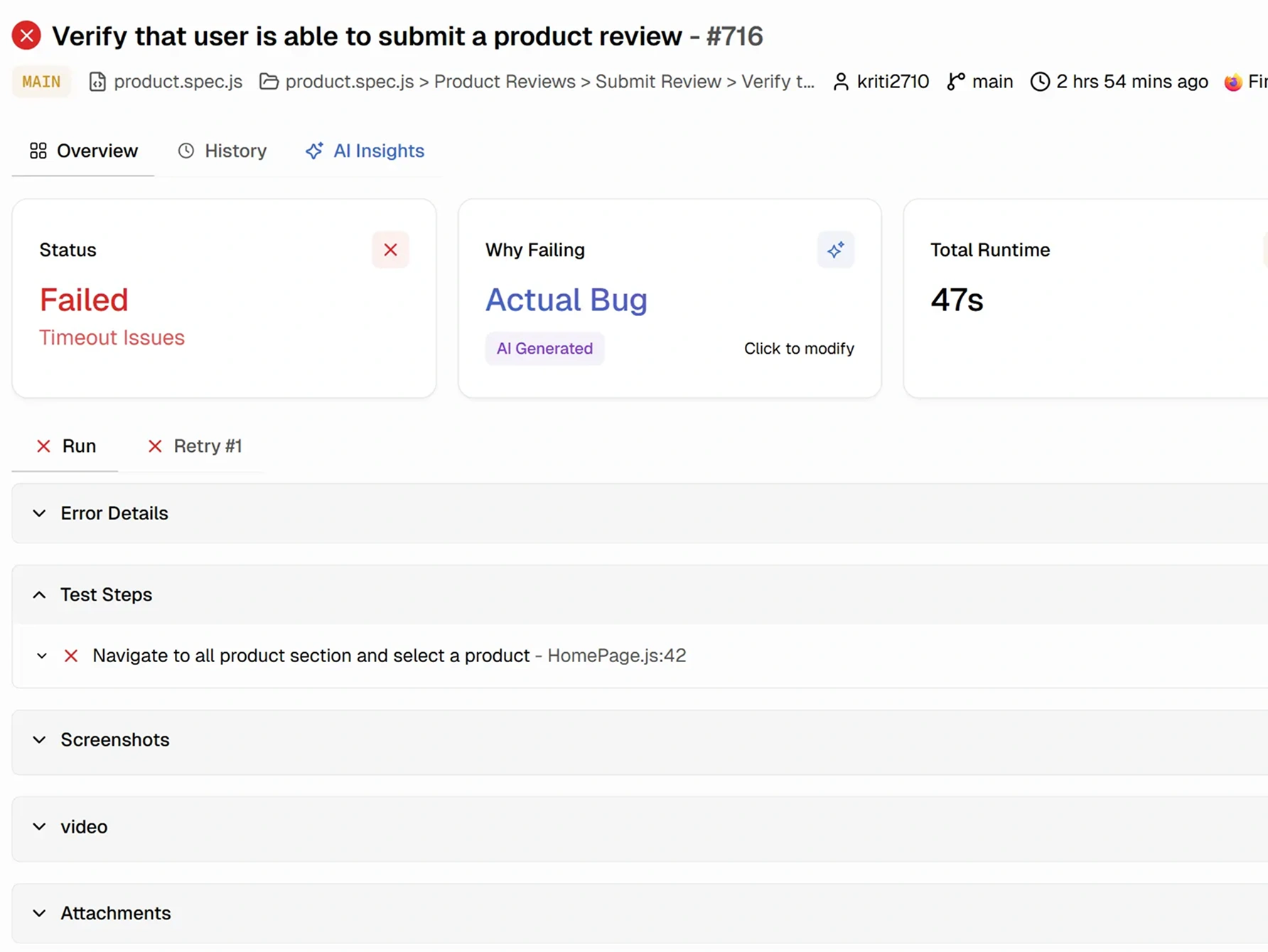
Argos renders side-by-side screenshot diffs and highlights pixel differences in red. It is strong for visual QA, but it does not record functional evidence like Playwright traces, network logs, or console output, so you debug logic failures elsewhere.
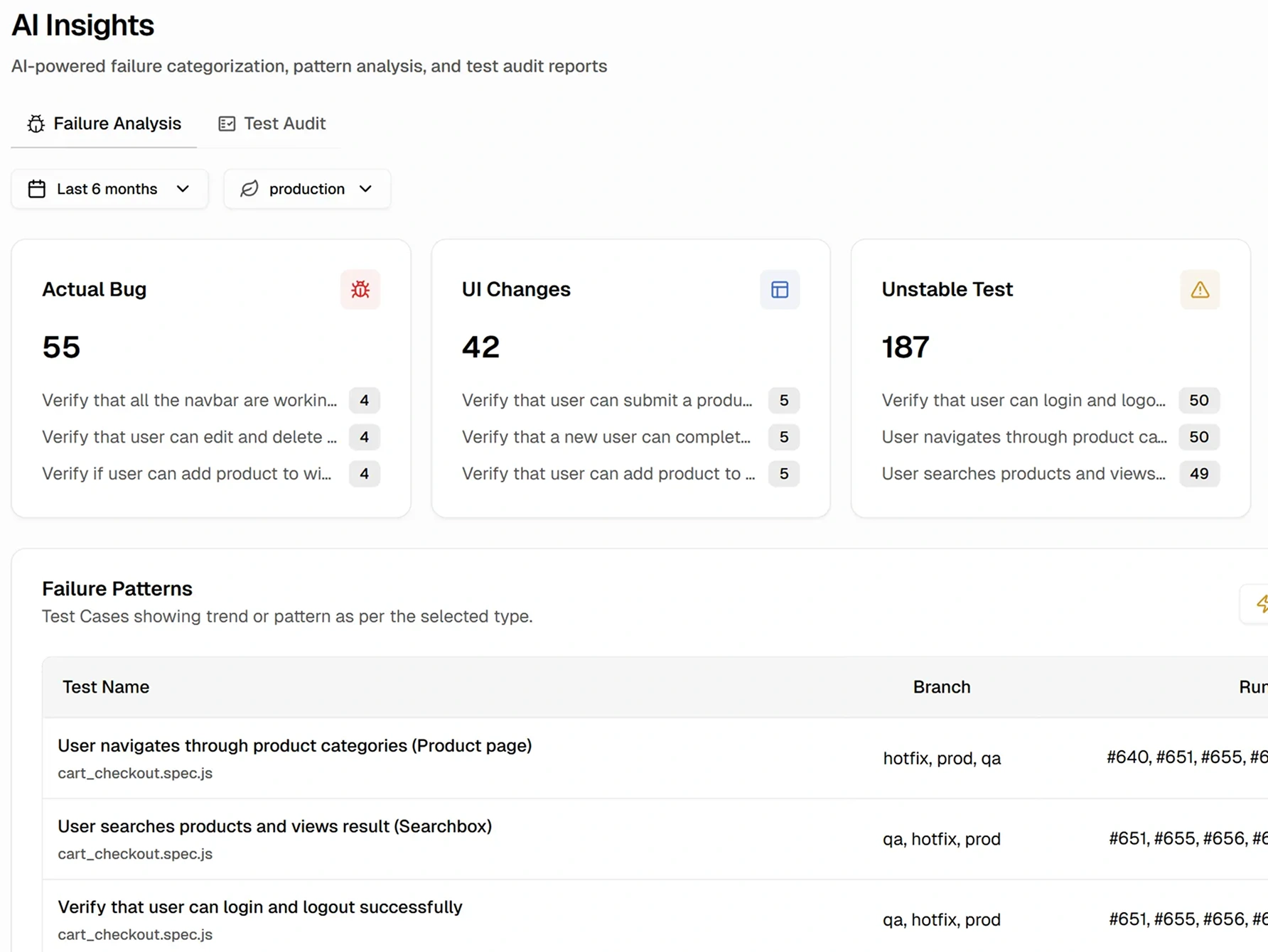
Argos uses visual analysis algorithms to stabilize screenshot testing and ignore anti-aliasing or sub-pixel rendering differences. It does not offer failure categorization, so functional errors cannot be grouped by stack trace or automatically identified as flaky tests.
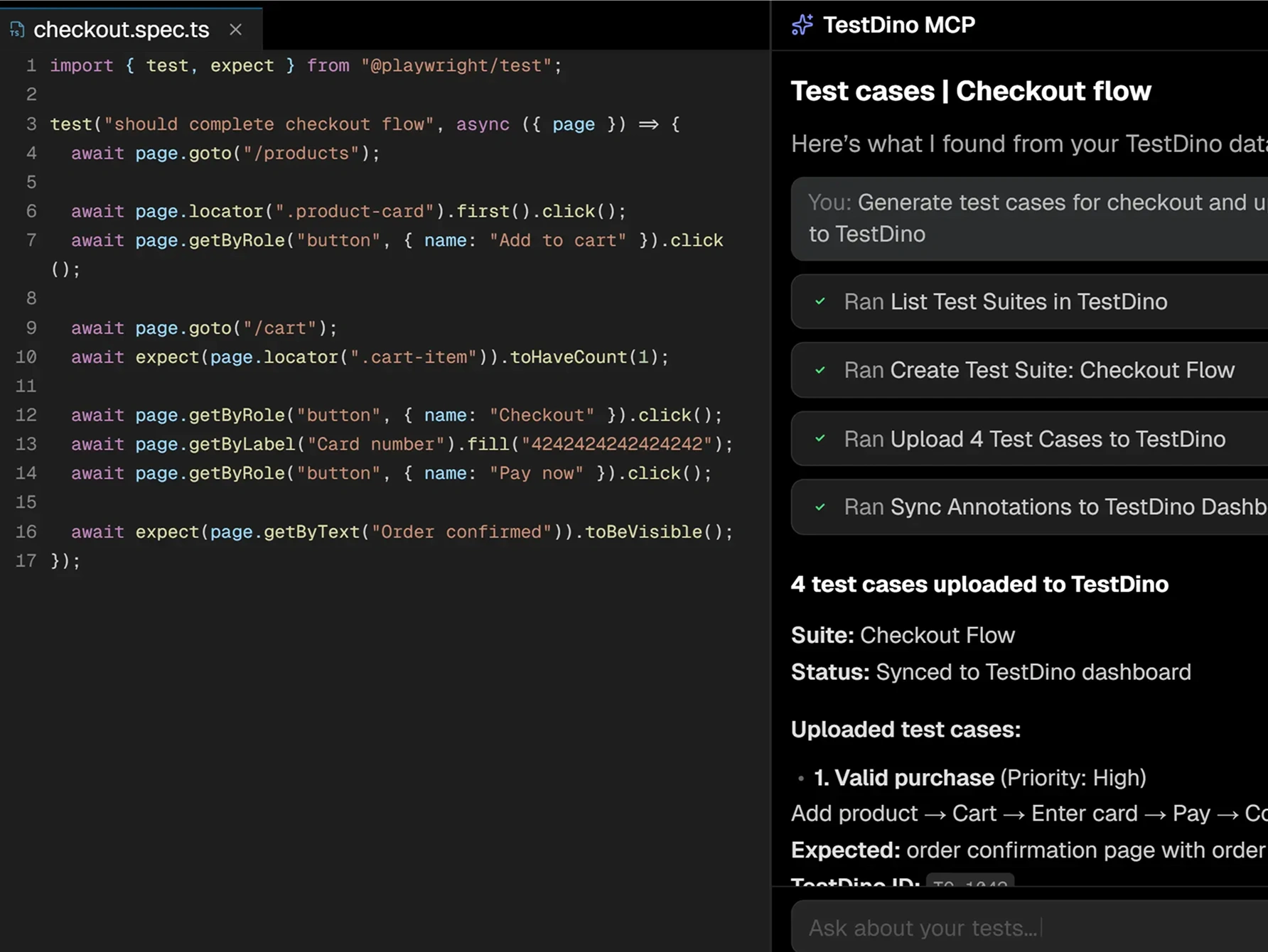
list_testruns, debug failures with full trace and artifact context through debug_testcase, and rank flaky tests across recent runs through list_testcase.Argos does not provide a dedicated MCP server. AI coding agents running in your IDE cannot query visual build reports or approve screenshot diffs directly from the editor.
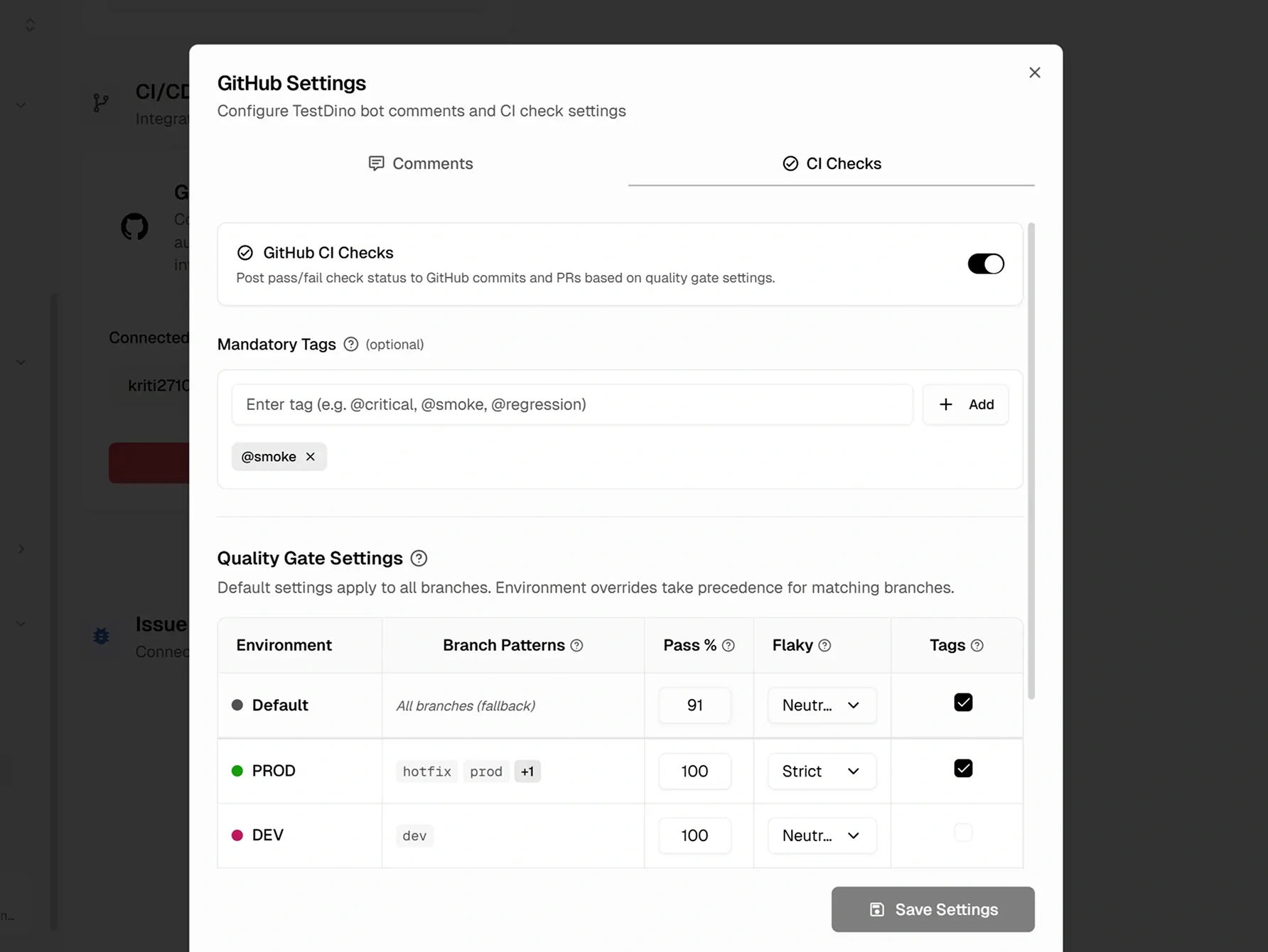
Argos integrates with your CI/CD provider to post status checks for visual reviews, blocking pull requests until pixel changes are approved. It lacks functional status gates, sharding reruns, and branch-to-environment analytics.
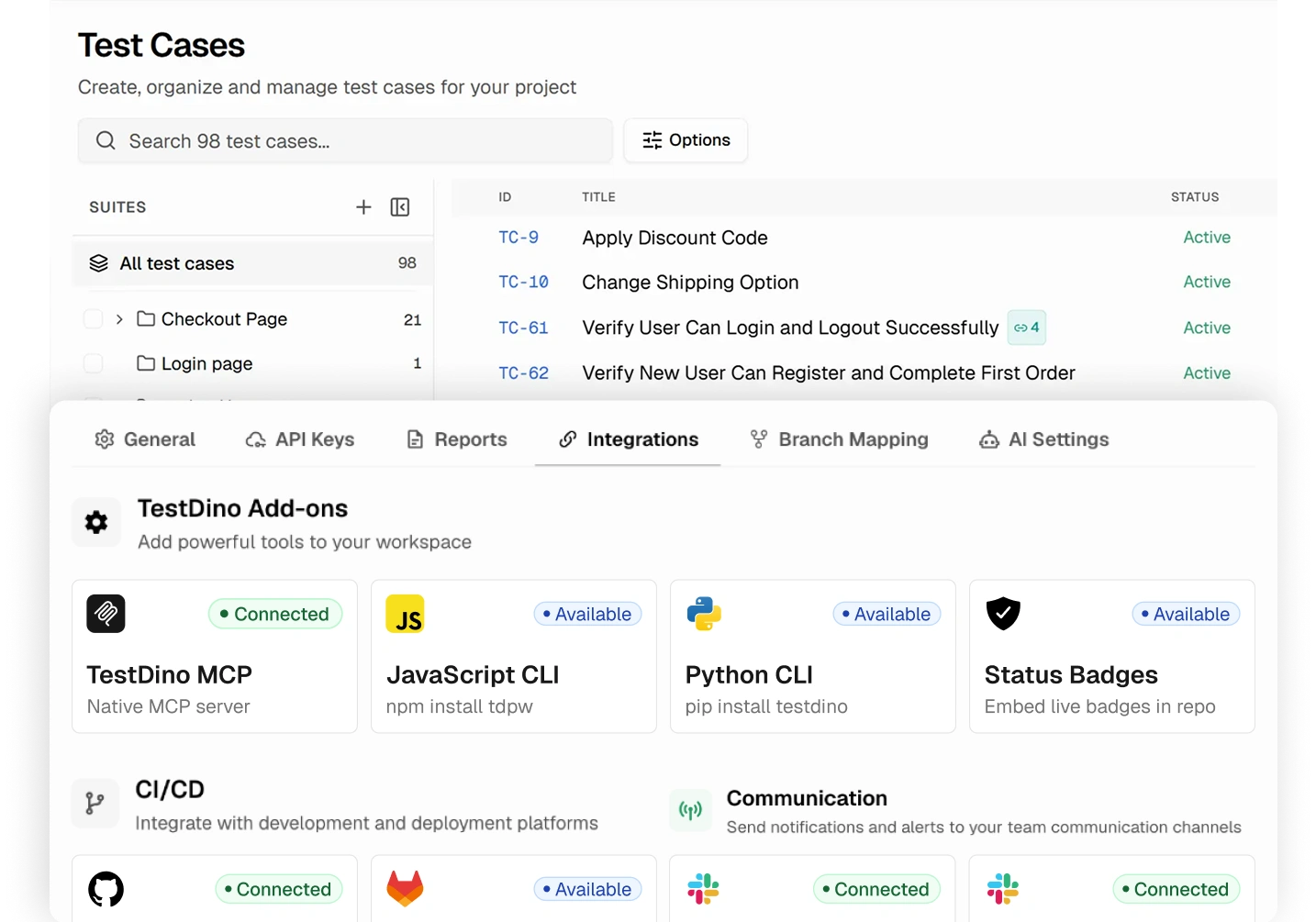
Argos is focused entirely on visual regression testing. It does not provide manual test case management, nested suites, or import tools for QA frameworks. Integrations cover Slack notifications for visual review alerts and basic issue tracking.
Purpose-built capabilities that help Playwright teams ship faster and debug smarter.
Watch test results stream as each test completes. Shard-aware, no refresh needed.
Screenshots, video, and retry-level evidence are attached to every failed test attempt.
Rerun only failed tests with shard and branch awareness. Cut CI retry time.
Where each tool leads, and where it falls short.
Argos is a specialized visual testing tool focused on catching UI regressions via screenshot diffs.
Visual Regression Testing
Excellent interface for reviewing and approving screenshot diffs across builds.
Storybook Integration
Native support for component-level visual testing.
Flaky Screenshot Handling
Smart baseline management to reduce false positives in visual diffs.
TestDino is a Playwright-native AI test intelligence platform that brings inline trace viewing, AI classification, and failure analytics into one focused reporter.
Inline Playwright Debugging
Trace viewer, screenshots, video, and console logs all open inline on the failed test. No artifact attachments, no local trace viewer launches.
Flat Pricing Model
Highly predictable pricing for engineering departments, avoiding per-user or "active user" billing as your team scales.
Cross-Run Flakiness Detection
Retry analysis plus pattern detection across run history. Flakes get caught even when CI retries are not enabled.
TestDino MCP Server
It lets AI coding agents query Playwright test runs, debug failures with full retry and artifact context, detect flaky tests, and manage manual test cases and suites, all from the editor.
Verified reviews from QA and engineering teams running Playwright in production.

Analyzing failed Playwright runs in CI used to eat up a lot of our time. TestDino solved that with a centralized dashboard that pulls in screenshots, logs, and failure trends in one place. What's been most useful is the automatic grouping of failures, since instead of checking each failing test individually, we can immediately see patterns and likely causes. It's made triaging failures, and identifying which tests are simply flaky, dramatically faster.

Lead Software Engineer
We inherited an existing test suite without much context on how it was built, and TestDino gave us a real way to take ownership of it. It shows us clearly which tests are the slowest, the flakiest, and the ones failing most often, which has been essential for knowing where to focus our effort. It's given us the visibility to understand the current state of the code and steadily improve its reliability.

Senior QA Engineer at Penpot by Kaleidos
I monitor everything my tests do, from the full list of tests to detailed error screenshots. The GitHub integration is smooth, so commit hashes, CI runs, and HTML reports open straight from the dashboard. I use TestDino almost every day, and it has improved the quality of our automation code.

Lead QA Automation Engineer
Before TestDino, we were manually digging through raw reports to catch flaky and failing tests, and it took a lot of time. Now everything is stored and analyzed automatically, with no extra setup layers needed. The installation itself was simple, and it's made spotting flaky tests a much faster, cleaner process for our team.
Test Automation Team Lead
TestDino gives us a clean dashboard and reporting setup that's genuinely easy to work with, packed with useful analytics. It's effectively replaced what used to be a custom Power BI dashboard for us, while being far simpler to set up and maintain. The platform makes it easy to centralize and visualize results, so tracking trends and understanding failures no longer takes extra effort.
QA Automation Engineer
Reviewing our Playwright test results used to mean sifting through raw output to figure out what actually broke. TestDino changed that by giving us a clear, structured view of every run. Failed tests are easy to spot right away, and debugging that used to take real effort now moves a lot faster.
Automation Engineer
Enterprise-grade security so your team can focus on shipping instead of worrying about data.
Secure authentication, role-based access control, and data encryption safeguard your test data in transit and at rest.
Persistent analytics with historical tracking deliver reliable insights about test performance, coverage, and release readiness.
Automated backups and retention policies maintain a complete history of test data. Project-scoped access prevents unauthorized changes.
Argos charges based on screenshot volume, which scales linearly with your UI test suite. TestDino charges a flat monthly fee with predictable costs for Playwright-focused teams.
Argos uses usage-based tiers starting at $100/month. Costs scale directly with your screenshot capture volume as your UI test suite grows.
Competitor pricing shown as published on the vendor's website and may vary. Check the vendor's pricing page for current rates.
35,000 screenshots per month
Extra screenshots at $0.004 each, or $0.0015 for Storybook screenshots
Team collaboration and reviews
Media sharing with team-scoped links and 1-year retention
Private deployment protection
Slack and Microsoft Teams notifications
Pro support
Optional GitHub SSO ($50/month) and SAML SSO ($200/month)
For dev teams shipping to production. Flat pricing billed annually, with the managed dashboard, AI, and MCP Server included.
10,000 executions per month
Up to 3 team members
3-month data retention
AI failure classification with confidence scores
MCP Server with test case writes
Embedded trace viewer and debugging features
PR view and CI/CD optimization
Integrations with Jira, Linear, Asana, Slack
Competitor pricing shown as published on the vendor's website and may vary. Check the vendor's pricing page for current rates.
Stop wasting time on
flaky tests
No, they serve completely different purposes. Argos is a visual regression testing tool designed to catch pixel-level changes. TestDino is purely built for Playwright functional test intelligence, providing deep trace viewing, AI classification, and MCP agent integration. Many teams use both tools together.
Side-by-side comparisons of features, pricing, and integrations to help you pick the right testing tool.
All product names, logos, and trademarks referenced on this page are the property of their respective owners. TestDino is not affiliated with, endorsed by, or sponsored by any competitor named above. Competitor features and pricing reflect publicly available information as of May 2026 and may have changed since. Check with each vendor for current details.