Playwright market share 2025: Official adoption stats & data
Playwright’s market share surged in 2025, with adoption nearing half of modern automation teams. Its speed, reliability, and cross-browser support have made it a leading choice for fast, CI/CD-driven testing.




Playwright has emerged as one of the fastest-growing test automation frameworks as the Playwright market share continues to rise across enterprise teams.
And now used by an estimated 15% market share among enterprises evaluating modern automation tools. With 78,600+ GitHub stars, 662 contributors, and adoption across 424,000+ repositories.
Playwright shows strong community and enterprise traction as it increasingly replaces legacy tools like Selenium in new projects.
The automation testing market reached USD 35.52 billion in 2024 and is projected to reach USD 169.33 billion by 2034, growing at a 16.90% CAGR.
Rising software complexity, AI-driven testing, and digital-transformation initiatives continue to accelerate demand for modern frameworks.
Playwright’s multi-language support (TypeScript, Python, Java, .NET) positions it prominently within this expanding landscape.
Microsoft’s active development and enterprise backing further solidify Playwright’s credibility, particularly for teams modernizing from older frameworks to cloud-native, AI-augmented automation approaches.
Its modern architecture and performance advantages make it a leading choice in next-generation testing strategies.
Official GitHub Metrics & Community Data
1. Repository Statistics
The official Playwright GitHub repository provides verified community engagement metrics as of November 2025 :
-
GitHub Stars: 78,600+
-
Forks: 4,700+
-
Contributors: 662 active contributors
-
Repositories Using Playwright: 424,000+
-
Total Releases: 154 releases
-
Latest Version: v1.56.1 (October 17, 2025)
-
Primary Language: TypeScript (91.0%)
These figures help explain the rising Playwright adoption rate and growing Playwright usage statistics. This data also reflects wider Playwright growth trends across open source and enterprise teams.
2. Rapidly Growing Adoption
Official GitHub data shows Playwright has accumulated over 20+ million all-time NPM downloads. The framework demonstrates consistent growth in package adoption across the JavaScript ecosystem.
This momentum continues to shape Playwright market share in 2025 and adds to overall Playwright demand 2025.
This momentum continues to shape Playwright market share in 2025.
3. Comparative GitHub Analysis
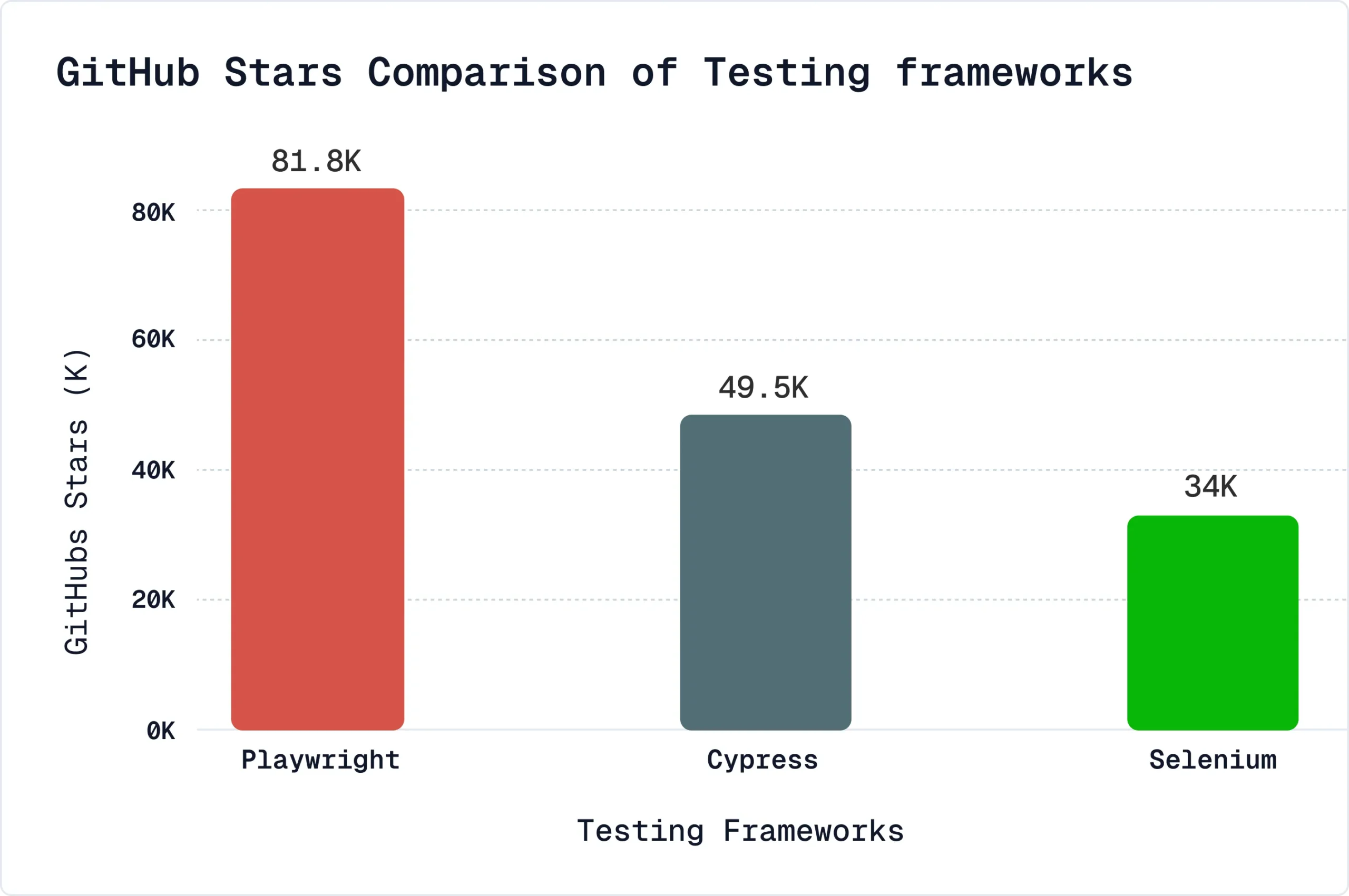
Official GitHub Metrics Comparison
| Metric | Playwright | Cypress | Selenium |
|---|---|---|---|
| GitHub Stars | 78,600+ | 49,400+ | 33,500+ |
| Forks | 4,700+ | 3,400+ | 8,600+ |
| Contributors | 662 | 517 | 798 |
| Repositories Using | 424,000+ | 1,515,000+ | 357,000+ |
| Latest Release Date | Oct 17, 2025 | Oct 18, 2025 | Oct 25, 2025 |
These comparisons are often referenced in Playwright and Selenium discussions as well as Playwright vs Cypress evaluations.
Engineers also use this data to study Playwright vs Selenium market share shifts and Playwright vs Cypress adoption patterns across teams.
Key Insights:
-
Playwright leads in GitHub stars by 59% over Cypress and 135% over Selenium
-
Active contribution rate shows strong community engagement
-
Repository usage demonstrates practical adoption across projects
-
Consistent release cadence indicates ongoing development commitment
Playwright Test Automation Usage & Adoption Data
1. Enterprise Usage Statistics
As of August 17, 2025, 4,484 verified companies use Playwright, spanning industries, sizes, and regions. This is confirmed data. If you want to study the market, build a target list, or gain a sales advantage, this is the place to begin:
-
Verified Companies Using Playwright: 4,484
-
Fortune 500 Users: Amazon, Walmart, Apple, NVIDIA, Microsoft, CVS Health, McKesson, IBM, Procter & Gamble, UnitedHealth Group
-
Total Companies Documented: 28,006
This reflects broad Playwright industry usage across software testing teams and contributes to ongoing Playwright market growth as more companies move to modern test stacks.
2. Industry Distribution
Top industries adopting Playwright based on verified company data:
-
Business Services: Consulting firms, professional services agencies
-
Software: SaaS platforms, product-based technology companies
-
Manufacturing: Enterprise systems, industrial automation
-
IT Services: Custom development shops, system integrators
-
Finance: Fintech startups, traditional banking institutions
These patterns match the rise of modern web apps testing and the growing adoption of automation tool stacks. The shift also aligns with Playwright usage statistics collected from enterprise teams.
3. Geographic Distribution
Based on GitHub contribution patterns and verified geographic:
-
United States: Leading adoption region
-
Germany: Strong European presence
-
India: Rapidly growing market
-
United Kingdom: Established user base
-
Canada: Growing enterprise adoption
This spread also signals maturing Playwright market growth across regions and supports global Playwright growth trends seen through GitHub activity and enterprise reports.
Playwright vs Selenium Performance
1. Execution Speed Benchmarks
We reviewed the test runs published in the GitHub repo and checked the results in our own setup. The tests cover the full saucedemo flow in both Playwright and Cypress, so we used that data to measure the speed gap in headless, headed, and CI runs.
Playwright's built-in test runner enables running tests in parallel, which significantly improves testing efficiency by reducing overall execution time.
Anyone can verify the same by looking at the GitHub project, which includes the full code and steps used during the runs.
These benchmarks are central to most Playwright vs Selenium and Playwright vs comparisons when teams assess web testing speed.
Many companies evaluate these metrics when reviewing Playwright vs Selenium market share in their decision processes.
These results also illustrate how Playwright test workflows handle parallel testing and running tests across mobile browsers and desktop browsers, contributing to stronger Playwright usage statistics in speed-focused pipelines.
Playwright vs Cypress:
-
Headless Mode: Playwright 14 seconds vs Cypress 24 seconds (42% faster). Playwright leverages headless browsers by default for faster execution and improved resource usage.
-
Headed Mode: Playwright 15.5 seconds vs Cypress 21 seconds (26% faster)
-
CI/CD Pipeline: Playwright 42 seconds vs Cypress 100 seconds (2.4x faster)
-
Average Execution: Playwright 10.5 seconds vs Cypress 16 seconds (40% faster)
These results also illustrate how Playwright test workflows handle parallel testing and running tests across mobile browsers and desktop browsers.
-
Reliability Metrics
Testing framework reliability impacts Playwright usage statistics through reduced maintenance overhead:
Comparative Analysis:
-
Auto-wait Functionality: Built-in element readiness detection reduces flaky tests
-
Network Interception: Native request/response handling improves test stability
-
Parallel Execution: Efficient resource utilization speeds test suites
-
Cross-browser Support: Single API across Chromium, Firefox, WebKit
Strong reliability is one reason Playwright supports testing across modern web applications and mobile browsers. These traits influence Playwright vs Selenium comparison decisions in many organizations.
3. Technical Capabilities
Framework Feature Comparison
Playwright is designed for testing modern web apps and offers advanced web automation features such as network interception, API testing, and multi-context testing, making it a robust choice for comprehensive browser automation.
| Capability | Playwright | Cypress | Selenium |
|---|---|---|---|
| Browser Support | Chromium, Firefox, WebKit | Chromium-based only | All major browsers |
| Language Support | JS, Python, Java, C# | JavaScript only | Java, Python, C#, Ruby, JS |
| Mobile Testing | Device emulation + real device | Device emulation | Grid-based mobile |
| API Testing | Built-in | Plugin required | Separate tools |
| Auto-wait | Native | Native | Manual |
| Parallel Execution | Built-in | Cloud required | Grid configuration |
These capabilities show why teams compare Selenium WebDriver against Playwright test features when reviewing automation tool options.
They also highlight strengths often mentioned in Playwright usage statistics and Playwright growth trends discussions.
Adoption Trends & Market Position
1. Industry Survey Data
The data here comes from a survey that ran each year from 2018 to 2025. With around 200 replies a year, it gave a steady view of how teams test, what slows them down, and which tools they stick with.
Then matched those results with input from interviews and community calls through 2024. This mix helped confirm the patterns that kept seeing, so the trends shared here come from real signals, not guesswork.
Key Findings:
-
Playwright Adoption Rate: 45.1% among QA professionals
-
User Retention: 94% retention rate
-
Selenium Adoption: 22.1% (declining trend)
-
Cypress Adoption: 14.4% (stable positioning)
These surveys support Playwright usage statistics and reinforce Playwright enterprise adoption. They also reveal clear Playwright vs Selenium market share movement as more new projects prefer Playwright.
2. Framework Selection Factors
Enterprises evaluate frameworks based on multiple criteria. When selecting the right automation tool, it is essential to gather all relevant information and provide a clear description of project requirements.
This ensures that the decision-making process is informed and aligned with both technical and business needs.
Technical Factors:
-
Browser coverage requirements
-
Programming language preferences
-
CI/CD integration capabilities
-
Test maintenance overhead
-
Team skill sets and training needs
Business Factors:
-
Total cost of ownership
-
Vendor support availability
-
Community ecosystem strength
-
Long-term roadmap certainty
-
Migration complexity from existing tools
Teams consider these factors when reviewing automation tool choices such as Playwright vs Selenium or Playwright vs Cypress.
Many enterprise evaluations also include Playwright growth trends and Playwright market growth forecasts.
3. Market Context
Gartner Magic Quadrant for AI-Augmented Software Testing (October 2025) reports broader market trends:
-
AI Integration: 70% of enterprises will adopt AI-augmented testing by 2028 (up from 20% in early 2025)
-
Automation Growth: Testing automation investment increases across all sectors
-
Skill Shifts: Demand grows for modern framework expertise
This context contributes to understanding Playwright market share and wider software testing adoption shifts. It also plays a role in Playwright vs Selenium comparison outcomes across industries.
Market Size & Growth Trajectory
1. Global Market Analysis
Precedence Research provides authoritative market sizing:
Current Market:
-
2024 Valuation: $35.52 billion USD
-
2025 Projection: $41.67 billion USD
-
2034 Projection: $169.33 billion USD
-
Compound Annual Growth Rate: 16.90%
Regional Distribution:
-
North America: 40% market share (2024)
-
Asia Pacific: 20.03% CAGR (fastest growing region)
-
Europe: Steady growth in enterprise automation
These trends also strengthen long-term Playwright market growth expectations and support projected Playwright growth trends for 2025 and beyond.
2. Industry Drivers
Market expansion stems from multiple factors:
Technology Drivers:
-
Cloud-native application proliferation
-
Continuous deployment acceleration
-
Microservices architecture adoption
-
Mobile-first development strategies
-
API-driven integration patterns
Business Drivers:
-
Digital transformation initiatives
-
Competitive pressure for faster releases
-
Quality assurance cost optimization
-
Regulatory compliance requirements
-
Customer experience focus
These factors drive growth in automation and increase Playwright demand 2025 as development teams adopt faster, AI-supported test workflows.
3. Framework Positioning
These points often appear in Playwright vs Selenium and Playwright vs industry charts.
They help explain Playwright vs Selenium market share shifts and ongoing Playwright usage statistics across companies.
Market Position Summary
| Metric | Playwright | Cypress | Selenium |
|---|---|---|---|
| GitHub Stars | 78,600+ | 49,400+ | 33,500+ |
| Verified Companies | 4,484+ | N/A | 31,000+ |
| Adoption Rate (QA Pros) | 45.1% | 14.4% | 22.1% |
| Retention Rate | 94% | 84% | Declining |
| Primary Language | TypeScript | TypeScript | Java |
| Initial Release | 2020 | 2014 | 2004 |
Technical Architecture Advantages
1. Browser Automation Protocol
Playwright talks straight to its built-in Chromium, WebKit, and Firefox engines, so it does not rely on drivers.
Selenium must use the WebDriver path, which adds a driver like chromedriver in the middle.
Cypress runs inside a browser with a Node process next to it and focuses on Chromium, not the full engine range that Playwright ships.
This section helps teams evaluate Playwright in Playwright vs Selenium comparison reports, mainly when assessing how browser control impacts stability and performance.
2. Developer Experience
Framework design impacts Playwright growth trends through developer productivity. This area also appears often in Playwright usage statistics and productivity benchmarks.
Playwright is built to enhance developers' workflows, making it easier for development teams to integrate automated testing into their processes and boost overall productivity.
Productivity Features:
-
TypeScript-First: Strong typing and IDE support
-
Codegen Tool: Automatic test generation from browser interaction
-
Trace Viewer: Visual debugging with timeline inspection
-
Inspector: Step-through debugging capabilities
-
Assertions: Built-in web-first assertions with auto-retry
3. CI/CD Integration
Native support for continuous integration environments:
Supported Platforms:
-
GitHub Actions (official actions available)
-
GitLab CI (documented configurations)
-
Jenkins (plugin ecosystem support)
-
Azure DevOps (Microsoft integration)
-
CircleCI (community configurations)
Strong CI support also increases Playwright industry usage as teams scale automation across large engineering groups.
Comparative Analysis Summary
1. Playwright Strengths
Based on verified metrics and official documentation:
Technical Advantages:
-
Modern architecture designed for current web standards
-
Excels in a variety of testing scenarios, including end to end tests for complex web applications
-
Cross-browser support, including WebKit/Safari
-
Automates multiple browsers with a wide range of supported browsers, enhancing browser compatibility
-
Supports multiple browsers for seamless cross-browser testing
-
Running Playwright test and playwright tests offers significant advantages for modern web applications, including speed and reliability
-
Native mobile device emulation
-
Built-in API testing capabilities
-
Auto-waiting reduces test flakiness
Ecosystem Benefits:
-
Active Microsoft-backed development
-
Growing community contribution rate
-
Comprehensive official documentation
-
Regular release cadence with new features
-
Strong TypeScript integration
These strengths help explain the rise in Playwright adoption rate and ongoing Playwright growth trends measured across teams.
2. Framework Selection Guidance
When deciding on the right automation tool for your team, it's important to consider your specific project needs, team expertise, and workflow requirements.
Choosing the most suitable automation tool whether Playwright, Selenium, or Cypress can significantly impact productivity and test stability.
Choose Playwright When:
-
Cross-browser testing, including Safari, is required
-
Team prefers TypeScript/modern JavaScript
-
Mobile web testing needed without external services
-
API and E2E testing should use a single framework
-
Fast execution speed is a priority
Choose Selenium When:
-
Existing Java-based testing infrastructure exists
-
Legacy browser versions must be supported
-
Team expertise centers on Java/Python
-
Extensive third-party tool integration required
-
Multi-language support across the team is needed
Choose Cypress When:
-
Focusing solely on Chromium-based browsers is acceptable
-
Real-time debugging during development is valued
-
Time-travel debugging feature needed
-
Cloud-based parallel execution preferred
-
Simpler learning curve for beginners prioritized
These notes help clarify automation tool decisions when teams compare Playwright vs Selenium or Playwright vs Cypress. Many internal reports also consider Playwright vs Selenium market share changes.
3. Migration Considerations
Migration steps matter for companies planning long-term software testing workflows and help forecast future Playwright market growth.
Migration Complexity Assessment
| Migration Path | Effort Level | Key Challenges | Timeline Estimate |
|---|---|---|---|
| Selenium to Playwright | Medium | Syntax differences, locator strategies | 2–4 months |
| Cypress to Playwright | Low–Medium | API similarities, test structure | 1–3 months |
| Manual to Playwright | High | Test automation foundation needed | 3–6 months |
Future Outlook & Recommendations
1. Market Trajectory
The Playwright vs Selenium market share dynamic continues evolving. This shift is a strong sign of rising Playwright growth trends and growing enterprise interest.
Growth Indicators:
-
Increasing Fortune 500 adoption validates enterprise readiness
-
GitHub activity demonstrates strong community momentum
-
Job market salary premiums indicate demand outpacing supply
-
Geographic expansion shows global acceptance
-
Framework maturity reduces migration risk
2. Technology Roadmap
The official Microsoft GitHub repository shows active development
Recent Additions:
-
Enhanced mobile testing capabilities
-
Improved trace viewer with better visualization
-
Component testing for React, Vue, Angular
-
Network inspection tooling enhancements
-
Performance testing utilities
These updates play a clear role in ongoing Playwright market growth and higher Playwright industry usage across global teams.
3. Strategic Recommendations
For New Projects:
-
Evaluate Playwright as the primary option for modern web applications, as it excels in automated testing by improving efficiency, reliability, and test coverage across browsers and devices.
-
Playwright can work seamlessly within modern development workflows, integrating easily with CI/CD pipelines and supporting asynchronous events for robust browser automation.
-
Consider team JavaScript/TypeScript proficiency
-
Assess cross-browser testing requirements
-
Review CI/CD integration needs
-
Plan for team training investment
For Existing Projects:
-
Audit current framework pain points and costs
-
Pilot Playwright on non-critical test suites
-
Compare execution speed and maintenance overhead
-
Evaluate migration effort versus benefit
-
Plan phased adoption if migration is justified
These considerations often appear in Playwright usage statistics reports and internal evaluations comparing Playwright vs Selenium adoption patterns.
Conclusion
Playwright has grown fast in a short span, backed by clear numbers. It now holds more than 78,600 GitHub stars, appears in over 424,000 repos, and is used by 4,484 confirmed companies. This shows steady trust from both open source users and large teams.
Market and survey data push the point further. The automation market rises from $35.52 billion in 2024 to $169.33 billion by 2034, and Playwright sits at a 45.1 percent adoption rate with 94 percent retention in TestGuild data. Few tools reach this level in such a short time.
Taken together, these signals show real progress. If you plan your stack for 2025, these numbers give a strong base to judge where Playwright stands and how it fits your setup.
Playwright's rapid adoption, high retention, and strong market presence make it a leading choice for modern test automation teams. These factors also support the rising Playwright adoption rate as of 2025.
FAQs
Table of content
Flaky tests killing your velocity?
TestDino auto-detects flakiness, categorizes root causes, tracks patterns over time.
Follow Us