Playwright Flaky Test Debugging: How to Fix Unstable CI Pipelines
Stop chasing random CI failures. Learn advanced Playwright flaky test debugging techniques to trace, isolate, and permanently fix unstable tests.

Non-deterministic test failures undermine the core value of continuous integration. When test suites randomly fail in CI pipelines but pass locally, engineering teams rapidly lose trust in their automation. This leads to ignored test results, delayed deployments, and significant engineering hours wasted investigating false positives.
A reliable automation suite requires moving beyond temporary retries and addressing the underlying architectural flaws that cause test instability.
This guide provides a systematic, engineering-first framework for Flaky Test Debugging in Playwright. By isolating race conditions, managing test state, and properly configuring your execution environment, you can permanently eliminate transient failures and restore absolute confidence to your deployment workflow.
Common causes requiring Flaky Test Debugging
Identifying the root cause of an unstable test is half the battle. You cannot fix flaky tests if you do not understand the underlying architecture of modern asynchronous web applications.
| Root Cause | Impact on Suite | Recommended Fix |
|---|---|---|
| Network Races | High failure rate | Use web-first assertions |
| Hard Timeouts | Random CI failures | Remove static waits |
| Shared State | Cascading failures | Isolate test data |
Flaky Test Debugging is the systematic process of identifying, isolating, and resolving automated tests that produce inconsistent pass and fail results without any underlying code changes.
Asynchronous rendering and network races
Modern single-page applications (SPAs) load data asynchronously. DOM elements frequently appear on the screen at vastly different times depending on server response latency. If a test attempts to interact with a button before the associated JavaScript event listener is fully attached, the test will fail unpredictably.
This timing mismatch is the primary reason teams struggle with stability. Relying on fixed timers will inevitably cause problems on slower CI machines. Instead, you must synchronize your tests with the application's true state.
For a deeper look into identifying these synchronization gaps, explore our guide on proper test failure analysis.
Weak assertions and rigid timeouts
Using static timeouts is a dangerous anti-pattern. Waiting exactly five seconds guarantees a failure when a database query takes six seconds under heavy load.
Instead of arbitrary pauses, modern automation requires asserting against the final expected state. Expecting an element to be visible before interacting makes your logic resilient against minor server delays. Playwright offers built-in auto-waiting mechanisms designed specifically for this.
Learn how to master dynamic waits by reading our detailed guide on the Playwright timeout.
Test data contamination and shared state
Tests that share a single staging environment often corrupt each other's data. If Test A deletes a user account that Test B relies on, Test B will fail randomly depending on execution order. Parallel execution acts as a magnifying glass for these collisions.
Every test should create its own unique data payload. Using API setup blocks to generate fresh records before the UI interaction begins ensures complete isolation.
If your team struggles with shared environment state, review our flaky test benchmark to see how elite engineering teams manage test data.
Third-party dependency failures
Modern applications rely heavily on external services, such as payment gateways or third-party authenticators. These external dependencies can experience downtime, rate limiting, or sandbox resets, causing your tests to fail through no fault of your own.
Mocking these external services is the most effective defense mechanism. By intercepting network requests and providing mocked responses, you guarantee the test runs identically every single time.
Step-by-step Flaky Test Debugging in Playwright
Once you understand the triggers, you must act decisively. Playwright provides incredible built-in utilities designed specifically to root out non-deterministic behavior.
Isolating the unreliable test locally
You must separate the unstable test from the rest of the suite to rule out global state pollution. Run it in isolation using the .only annotation. This allows you to focus entirely on the specific logic causing the failure without external interference.
import { test, expect } from '@playwright/test';
test.describe('Dashboard feature', () => {
  test.only('loads widgets correctly', async ({ page }) => {
    await page.goto('/dashboard');
    await expect(page.locator('.widget')).toBeVisible();
  });
});
Disabling automatic retries for clarity
When investigating locally, you must disable automatic retries. Retries mask the underlying problem and make it harder to observe the initial failure state.

Tip: Always disable automatic retries when investigating a failure locally. Run the test in a loop to force the race condition to surface.
Use the terminal flag --retries=0 combined with --repeat-each to force the failure to happen. This creates a reliable reproduction of the instability.
# Force the flaky test to reveal itself by looping it
npx playwright test --retries=0 --repeat-each=20
Capturing trace data for visual analysis
Trace files are your most powerful diagnostic tool. They record every network request, console log, and DOM snapshot during the test execution. Enabling tracing in your configuration file is a non-negotiable requirement for serious automation teams.

For a deeper dive into configuring and reading traces, read our complete tutorial on the Playwright trace viewer.
Leveraging the interactive Playwright inspector
The Playwright Inspector allows you to pause test execution live. You can explore the page state interactively as the test runs, which is invaluable for figuring out why a specific locator failed to resolve.
Insert a pause command in your script right before the suspected breaking point. The browser will halt, allowing you to test new locators directly in the console.
test('debug complex interaction', async ({ page }) => {
  await page.goto('/checkout');
await page.pause(); // Execution halts here for live debugging await page.getByRole('button', { name: 'Submit' }).click();
});Best practices to prevent test instability
Writing robust code from the start saves endless debugging hours. Adopting patterns that naturally resist flakiness forms the core of a resilient automation strategy.
Adopting resilient web-first assertions
Web-first assertions automatically wait for conditions to be met, retrying the check until a timeout is reached. This is exponentially safer than checking a state only once.
Web-first assertions are built-in checks that automatically wait and retry conditions until they pass or a specific timeout is reached.
For example, checking if a button is visible will keep polling the DOM. If the button renders after two seconds, the test passes perfectly without needing a hard sleep.
// Bad: checking state once
// expect(await page.locator('.submit-btn').isVisible()).toBeTruthy();
// Good: auto-retrying web-first assertion
await expect(page.locator('.submit-btn')).toBeVisible({ timeout: 10000 });
Review more examples of this pattern in our Playwright best practices guide.
Using semantic and user-facing locators
CSS and XPath locators break easily when developers refactor layouts. They are coupled to the DOM structure, not the user experience.
Instead, rely on user-facing attributes. Roles, labels, and text content represent what the user actually sees. If a div changes to a span, a semantic locator will still find the element.
Mastering these strategies takes practice. Read our comprehensive breakdown on utilizing Playwright locators.

Managing browser state independently
Never rely on a previous test to log you in. Each test block must handle its own authentication state. Playwright allows you to save and reuse authentication cookies and tokens efficiently via storageState.
This drastically speeds up execution while maintaining complete test isolation. By avoiding the UI overhead of logging in for every single test, you eliminate a major source of flakiness.
If your setup feels sluggish, learn how to reduce Playwright CI runtime.
Mocking unpredictable backend services
Your frontend tests should not fail because the staging database is undergoing maintenance. Mocking API responses ensures your tests remain fast, reliable, and strictly focused on UI behavior.
Use Playwright's network interception API to fulfill requests with static JSON. This removes backend latency as a source of flakiness.
test('renders user profile safely', async ({ page }) => {
  await page.route('**/api/users/me', route => {
    route.fulfill({ json: { id: 1, name: 'TestDino Admin', role: 'admin' } });
  });
  await page.goto('/profile');
  await expect(page.getByText('TestDino Admin')).toBeVisible();
});
Advanced tools for analyzing test failures
Proper reporting turns raw data into actionable insights. Playwright provides built-in tools to track your stability journey, but scaling requires advanced analytics.
Utilizing built-in HTML reporters
The default HTML reporter highlights unstable tests clearly, marking tests that failed initially but passed on a retry. This visual indicator helps you prioritize your fixes quickly.
While built-in reporters are a Playwright cloud companion like TestDino captures deep diagnostic evidence (traces, videos, and network logs) automatically for every failed run. This eliminates the need to manually parse terminal output.

You can filter reports to show only flaky results, keeping your focus sharp on the worst offenders.
For a broader perspective, check out our guide on creating a comprehensive flaky test report.
Customizing the CI retry configuration
Retries are a safety net, not a permanent solution. Running retries only in the CI environment is a standard industry practice. Keep local runs strict without any retries to force developers to address race conditions before merging code.
import { defineConfig } from '@playwright/test';
export default defineConfig({
  // 2 retries on CI, 0 retries locally
  retries: process.env.CI ? 2 : 0,
  use: {
    trace: 'retain-on-failure',
  }
});
Integrating visual regression checks
Sometimes tests pass functionally but fail visually—a button might be clickable but hidden behind a broken CSS modal. Visual regression testing catches these silent layout failures.
Playwright offers built-in visual comparisons using screenshots, allowing you to assert that a page matches a golden baseline perfectly.
test('dashboard layout remains intact', async ({ page }) => {
  await page.goto('/dashboard');
  await expect(page).toHaveScreenshot('dashboard-baseline.png', { maxDiffPixels: 100 });
});
Extracting logs from the browser console
JavaScript errors in the browser console often cause silent test failures where the UI simply freezes. Capturing these logs helps diagnose the root cause rapidly.
test('catches console errors', async ({ page }) => {
  const errors: string[] = [];
  page.on('console', msg => {
    if (msg.type() === 'error') errors.push(msg.text());
  });
  await page.goto('/app');
  expect(errors.length).toBe(0);
});
How CI environments impact test stability
Tests that pass locally often fail in the cloud because CI machines are heavily constrained and share resources. Acknowledging this environment gap is critical.
Resource constraints and CPU throttling
CI runners have limited CPU allocations. Animations and scripts take significantly longer to execute. A test that takes two seconds on an M3 Mac might take five seconds in a GitHub Actions runner.
Tip: Use Chrome DevTools protocol to throttle your local CPU. This helps simulate the slower CI environment and exposes hidden race conditions quickly.
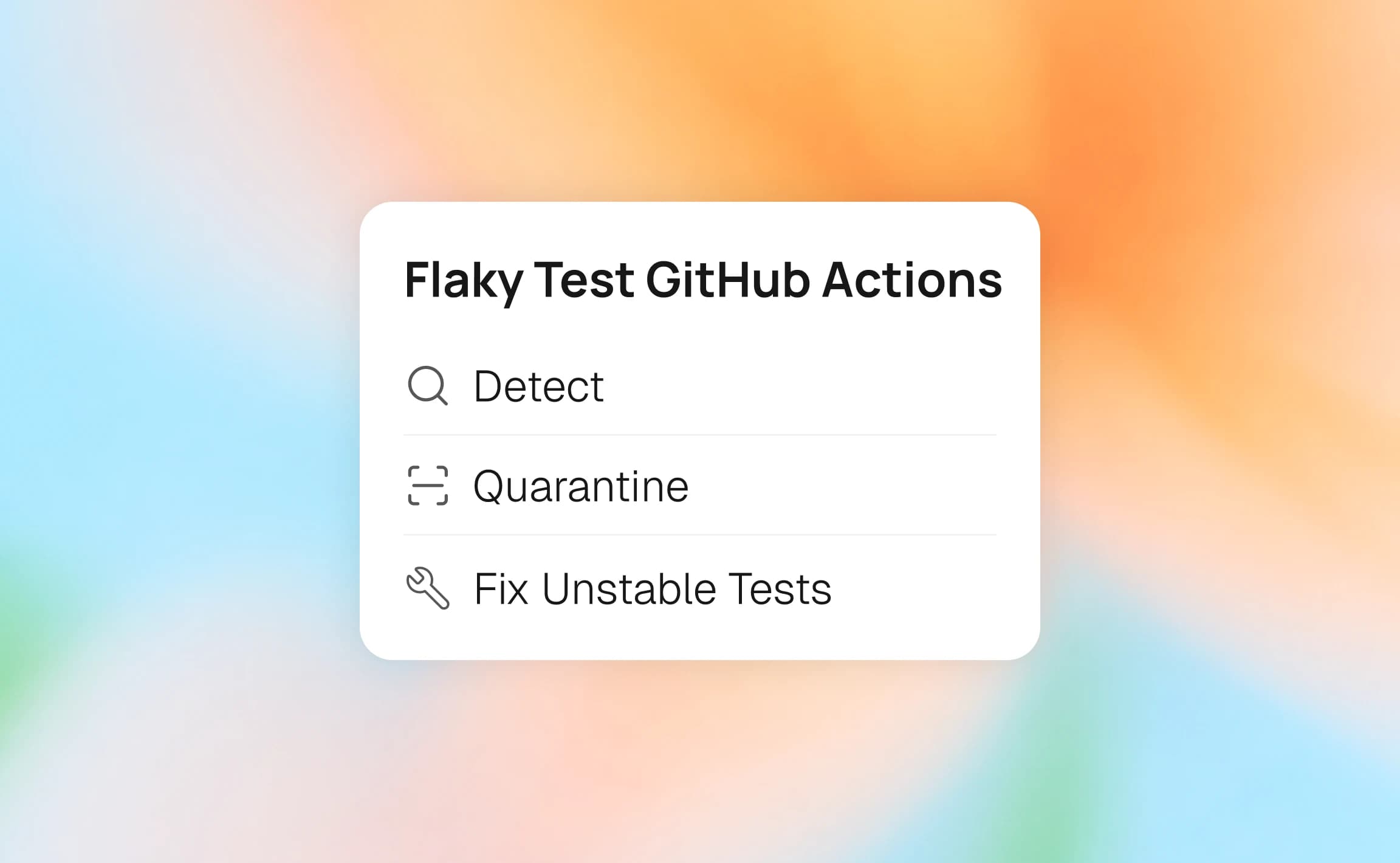
Read about optimizing workflows in our guide to flaky test GitHub Actions.
Network latency and timing variations
Network speed in CI pipelines is highly unpredictable. API responses might arrive instantly or take several seconds. Intercepting and explicitly waiting for network requests stabilizes these variations.
test('waits for search results', async ({ page }) => {
  const searchPromise = page.waitForResponse('**/api/search?q=*');
  await page.getByPlaceholder('Search').fill('TestDino');
  await page.keyboard.press('Enter');
  const response = await searchPromise;
  expect(response.status()).toBe(200);
});
Headless mode rendering differences
Running tests in headless mode saves resources but behaves differently. Fonts may render smaller, triggering unexpected layout shifts that cause locators to miss their targets. Always run final local checks in headless mode to mirror the cloud environment.
Parallel execution memory limits
Running tests in parallel speeds up your suite but consumes massive amounts of RAM. If the CI runner hits an out-of-memory exception, browser processes crash randomly. Tune your worker count based on your specific CI machine specs rather than defaulting to the maximum available.
Building a long-term stability strategy
Fixing one test is easy; maintaining a suite of thousands is an engineering challenge. Flaky Test Debugging must become part of your team's core culture.
Continuous monitoring and proactive quarantining
When a test becomes unstable, it damages trust rapidly. You should quarantine it immediately to protect the pipeline. A quarantined test runs in the background to gather data but does not fail the build.
This gives your team time to fix the root cause without blocking deployments. You can use advanced flaky test detection to automate this tedious process.

Note: Consistency is your best weapon. Review your test failures daily before they accumulate into a massive, unmanageable backlog.
Tracking failure metrics over time
You must track stability metrics to secure engineering resources. How many tests fail randomly per week? How much time is wasted investigating them? Explore our flaky test analysis guide for a deeper dive into data strategy.
You can also read the state of test automation to benchmark your team against global standards.
Fostering a quality-first engineering culture
Quality cannot be the sole responsibility of the QA team. Developers must own the stability of the tests they write.
You can quantify the yearly cost of unstable tests using TestDino's free tools. When developers see the financial impact using the flaky test cost calculator, alignment improves immediately.
Educating developers on testing patterns
Continuous education is the ultimate weapon against bad code. Document internal best practices in a central wiki and run monthly workshops. Ensuring new engineers learn proper Playwright patterns prevents old mistakes from being repeated.
Conclusion
Mastering Flaky Test Debugging takes time and discipline. While you cannot eliminate every unstable test overnight, applying web-first assertions, strict data isolation, and deep trace analysis will yield immediate improvements.
Make stability a core engineering metric, not just a QA chore. When developers trust the automation suite, deployment velocity increases dramatically. Start using the trace viewer today, quarantine the bad actors, and slowly rebuild your confidence.
FAQs about Flaky Test Debugging

Vishwas Tiwari
Software Engineer