State of QA Harness in 2026: How Test Harnesses Became Agent Harnesses
AI agents now run tests. See what the state of QA harness means in 2026 and how to build yours.
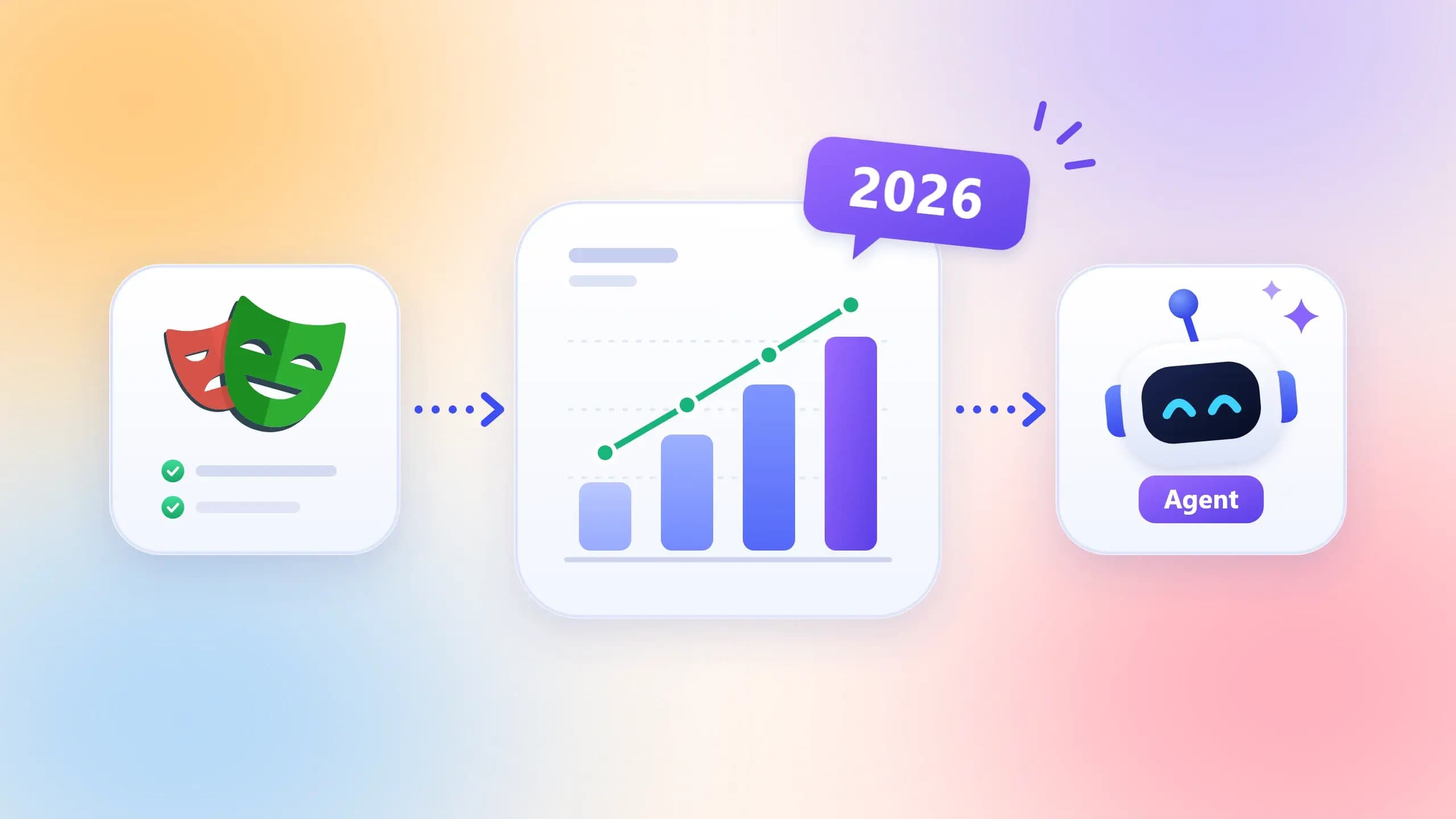
A QA harness is the scaffolding around your tests: the setup, the stand-ins for missing pieces, the run button and the report. The state of QA harness work changed over the past year for one reason: the thing pressing that run button is now often an AI agent.
Many harnesses grew by accident. They work on the laptop of the person who built them, produce flaky tests in CI, and give an agent nothing it can read when a run goes red.
This guide shows where the QA harness stands today, using official survey data and the engineering write-ups from OpenAI and Anthropic that put the word harness back into circulation. It then lays out the 6 layers a modern harness needs and how to build one with Playwright test automation.
What is a QA harness
The word harness has been in testing vocabulary for decades. It has always meant the same thing at heart: everything you assemble around the code under test so that tests can run on their own and produce a verdict.
A QA harness is the software that surrounds your tests so they can run on their own and give a verdict. It includes the test runner, fixtures for setup and teardown, drivers and stubs that stand in for missing parts, test data, environment settings, and the reporting that turns results into a pass or fail.
Drivers and stubs were the original reason harnesses existed. A driver calls a module that has no caller yet, and a stub answers for a module that has not been written. That let teams test a component before the whole system was ready.
The classic components and what they do now
Every one of those components still exists in 2026. What changed is who consumes them. The table below lists the classic job of each part and the extra job it took on once AI agents started reading the same outputs as humans.
| Component | Classic job | Added job in 2026 |
|---|---|---|
| Test runner | Discover and execute tests in order | Run in parallel, in CI, and on demand for an agent |
| Drivers and stubs | Stand in for missing modules | Mock third-party APIs so runs are deterministic |
| Fixtures | Set up and tear down state | Give every test and every agent the same known world |
| Test data | Feed inputs and expected outputs | Seed and reset through APIs, not through the UI |
| Reporter | Print a summary for a person | Emit structured output an agent can act on |
| Configuration | Point at the right build and environment | Live in version control so it is diffable and reviewable |
Test harness vs test framework
The two terms get swapped constantly, so it helps to separate them. A framework is the thing you install. It gives you a runner, assertions and a plugin model, and Playwright Test is one example.
The harness is what you assemble on top of it for your product. That means the login fixture, the seeded database, the mocked payment provider, the CI job and the report that lands in a pull request. A sound Playwright framework setup is where the harness starts, not where it ends.
Why "harness" suddenly means something new
In late 2025 and early 2026 the word acquired a second meaning. OpenAI and Anthropic both published engineering posts describing the environment they build around a coding agent, and both called it a harness.
That environment contains the same ingredients as a QA harness: a defined setup, deterministic checks, readable failure output and a record of what happened. Because the ingredients are the same, this guide treats the two meanings as one subject. How far the second meaning has spread is measurable, and four reports measured it.
The state of QA harness in 2026: what the data says
Four official reports published between mid-2025 and early 2026 describe the same picture from different angles. Read together, they show a lot of AI use, little trust in its output, and no way to reconcile the two except a check that runs outside the model.
AI is everywhere in testing, but rarely at scale
The 2026 State of Testing Report from PractiTest puts AI adoption among testing professionals at 76.8% globally, and at 81.7% inside enterprises with more than 10,000 employees. Test case creation is the top use, cited by 69.6% of respondents.
The World Quality Report 2025-26 from Capgemini, Sogeti and OpenText adds the missing half of the story. Only 15% of organisations have scaled generative AI across the enterprise, while 43% are still experimenting. Adoption is wide, but shallow. A fuller breakdown of those numbers sits in the state of AI automation report.
Trust is the bottleneck, not adoption
The 2025 Stack Overflow Developer Survey collected more than 49,000 responses from 177 countries. It found that 84% of developers use or plan to use AI tools, yet 46% actively distrust the accuracy of the output and only 33% trust it. Just 3.1% say they highly trust it.
The chart below puts those figures side by side. The gap between the first bar and the last one is the space a QA harness has to fill.

The most common frustration in the same survey, named by 66% of respondents, is AI output that is "almost right, but not quite". A further 45.2% say debugging AI-generated code takes more time than expected. Both are exactly the failure modes a harness with deterministic checks is designed to catch.
The 2025 DORA report from Google Cloud reaches the same conclusion from nearly 5,000 respondents. AI adoption correlates with higher throughput and with lower delivery stability. The report states that without control systems such as strong automated testing, more change volume simply produces more instability.
Note: The state of QA harness in 2026 comes down to one gap. Teams have added AI to the front of the pipeline, where code and tests get written faster, without upgrading the harness at the back that decides whether any of it is right.
Two engineering teams hit that gap at scale, one with a million lines of agent-written code and one with agents running for days. What they built to get past it is the subject of the next section.
From test harness to agent harness: what OpenAI and Anthropic changed
Both companies published detailed accounts of running coding agents for months at a time. Neither post is about QA. Most of what they learned, though, is about verification, and verification is QA's job.
OpenAI's harness engineering experiment
In Harness engineering: leveraging Codex in an agent-first world, OpenAI describes a team that grew from 3 to 7 engineers. In 5 months it shipped roughly 1 million lines of agent-written code across about 1,500 pull requests, with no lines written by hand. Their summary of the human role is that engineers "shift from writing code to designing environments, specifying intent, and building feedback loops."
Three of their practices map directly onto a QA harness:
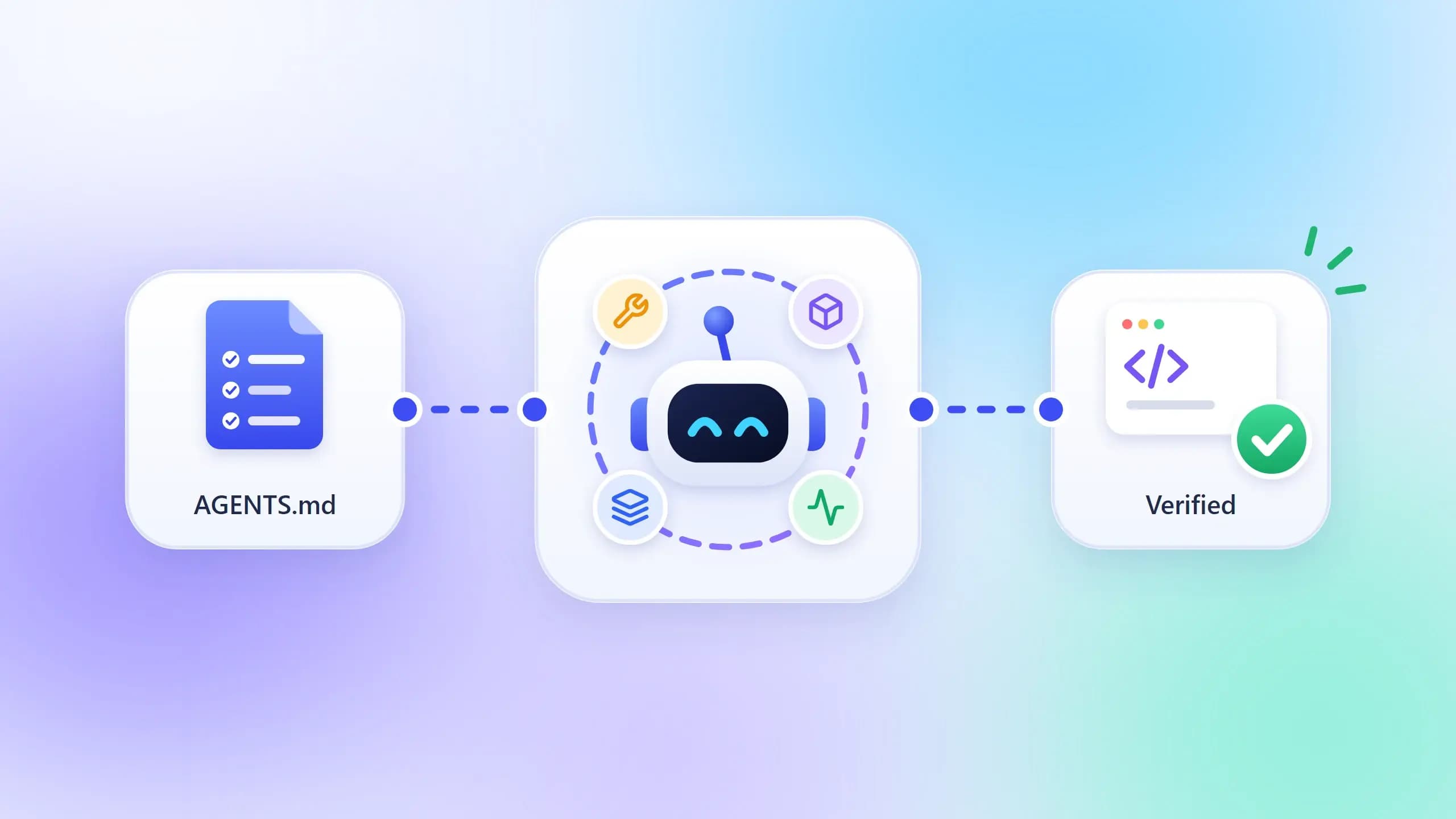
- A short contract file. The repository's AGENTS.md is kept to about 100 lines and works as a table of contents, not an encyclopedia, so the agent reads the rules every time.
- Errors that teach. Custom lint rules write remediation instructions straight into the error message, so the agent fixes the problem instead of guessing.
- Eyes on the running app. The team wired the Chrome DevTools Protocol into the agent runtime so it could take DOM snapshots and screenshots and verify its own changes in a browser.
They also admit what happened before those pieces existed. The team spent every Friday, about 20% of the working week, cleaning up agent output by hand. Encoding standards into the repository and running recurring cleanup agents replaced that ritual.
Anthropic's two harness write-ups
Anthropic's first post, Effective harnesses for long-running agents from November 2025, splits the work between an initializer agent and a coding agent. The initializer writes a feature list as JSON with a passes field per feature, and the coding agent may only flip that field after a real check. The instructions are blunt: removing or editing tests is "unacceptable" because it hides missing or buggy functionality.
The second post, Harness design for long-running application development from March 2026, adds an evaluator agent that tests through browser automation with Playwright MCP. The reason is a bias the authors call out directly: when agents grade their own work they "confidently praise" it even when it is obviously mediocre. Separating the builder from the judge fixed that.
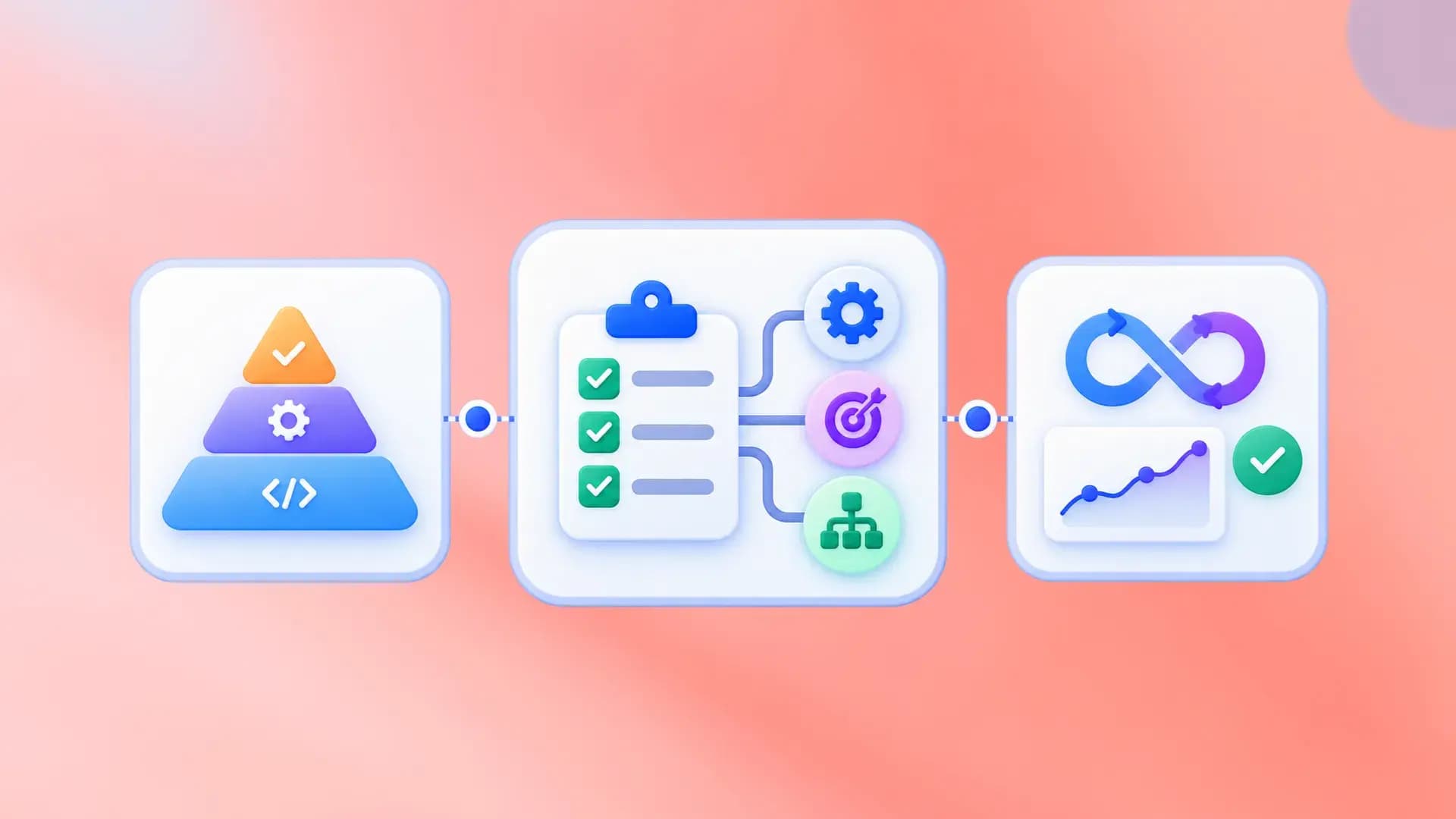
The infographic compares the three harness types that now overlap in QA work, including the eval harnesses used to score model output.

What this means for QA teams
Strip the AI vocabulary away and three rules remain, and every one of them is a harness rule:
- Verification lives outside the model. A test runner, a linter or a separate evaluator decides pass or fail. The agent that wrote the code never grades it.
- The environment must be legible. Rules, environment names and failure output are written so an agent can read them without a human translating.
- Memory is a file in version control. Feature lists, progress notes and results are diffable text, not tribal knowledge.
Those rules also settle the question of how to test AI-generated code: the same way you test human code, with a harness the author cannot talk its way past. The same applies when the thing under test is itself an agent, which is the subject of AI agent testing.

Tip: Write every assertion message and lint error as if an agent will read it next. "Expected order total 42.00, got 41.10; check the discount fixture in tests/fixtures.ts" is a fix. "Assertion failed" is a shrug.
Three rules are easy to agree with and harder to point at in a repository. The next section maps them onto files.
Anatomy of a modern QA harness: 6 layers that matter
The layers below are not new inventions. They are the classic harness components, regrouped by the question each one answers, so that a human and an agent get the same answer.
An agent harness is everything around an AI model that lets it do real work. That means the tools it can call, the files it reads for context, the memory it keeps between sessions, the checks that verify its output, and the rules about when to stop and ask a human. A QA harness that has all 6 layers below already covers most of it.
Each layer answers one question. If you cannot answer the question for your suite today, that layer is missing, whether or not you ever plan to hand it to an agent.

Layers 1 and 2: runner, fixtures and environment
Playwright Test ships the runner and the built-in page, context and request fixtures. Your harness starts where you extend them. A fixture that seeds a user through the API, hands it to the test, and deletes it afterwards is the smallest useful example.
import { test as base, expect } from '@playwright/test';
type Fixtures = { seededUser: { id: string; email: string } };
export const test = base.extend<Fixtures>({
  seededUser: async ({ request }, use) => {
    const res = await request.post('/api/test/users', { data: { plan: 'pro' } });
    const user = await res.json();
    await use(user);                                   // the test runs here
    await request.delete(`/api/test/users/${user.id}`); // teardown
  },
});
export { expect };
Everything a test needs should arrive this way. The guide to Playwright fixtures covers worker-scoped and automatic fixtures. Playwright authentication shows how to reuse a signed-in state instead of logging in through the UI in every spec.
Environment control is the second half of the same layer. A baseURL per environment and route.fulfill() for third-party calls keep a test from depending on a payment sandbox that is down at 3 a.m.
Layers 3 and 4: data and oracles
Test data should be created through the API and reset in teardown, never clicked into existence. Playwright's request fixture exists for exactly this, and Playwright network mocking shows the pattern for services you do not own.
The oracle is the part that decides pass or fail, and it must be deterministic. Web-first assertions such as await expect(locator).toHaveText() retry until the page settles and then give a hard verdict. The full list in Playwright assertions is the vocabulary an agent should be restricted to.
Layers 5 and 6: observability, gates and memory
Observability means a failure leaves evidence a person or an agent can act on. The config below records a trace on the first retry, keeps the HTML report, and adds a JSON report that scripts and agents can parse.
import { defineConfig } from '@playwright/test';
export default defineConfig({
  retries: process.env.CI ? 1 : 0,
  use: { baseURL: process.env.BASE_URL, trace: 'on-first-retry' },
  reporter: [
    ['list'],
    ['html', { open: 'never' }],
    ['json', { outputFile: 'results.json' }],
  ],
});
The trace is the single most useful artifact in the harness. Opening one in the Playwright Trace Viewer shows the DOM before and after every action, roughly the view OpenAI gave its agents through the DevTools Protocol.
Gates and memory close the loop. The Playwright job becomes a required check on the pull request, and results are kept run over run so trends are visible. Structuring those Playwright CI reports so they survive beyond one build is what turns a harness into a record. Naming the layers is the easy part. Building them in the wrong order is how a harness ends up bypassed.
How to build a QA harness for Playwright in 5 steps
Start with the CI gate and you gate a suite nobody trusts yet, so people learn to click past it. Start with the contract and every later step gets shorter, because humans and agents already agree on what done means.
- Write the contract first. Put conventions, environment names and the definition of done in a short AGENTS.md that humans and agents both read.
- Centralise setup in fixtures. Move login, seeding and cleanup into test.extend() fixtures so every spec starts from the same known state.
- Make verdicts deterministic. Use web-first assertions and typed test data. The runner decides pass or fail, never a model's opinion.
- Record evidence on failure. Turn on tracing on first retry, keep JSON and HTML reports, and write errors a person or an agent can act on.
- Gate the merge. Make the Playwright job a required check, retry once at most, and track the flake rate week over week.
The sequence is summarised below, and the rest of this section fills in the two steps that teams most often skip.

Step 1: the contract file
OpenAI's advice to keep the file to about 100 lines is the right constraint. The example below is shorter than that and still answers the four questions an agent asks most: how to run, where setup lives, what done means, and what to do on failure.
## Run
- Local: npm test   CI: npx playwright test --reporter=blob
## Rules
- Fixtures live in tests/fixtures.ts. Never log in through the UI inside a spec.
- Use getByRole / getByLabel locators. No CSS or XPath without a comment.
## Definition of done
- New behaviour has a spec, npm test is green, no existing test was deleted or skipped.
## On failure
- Read playwright-report/ and the trace before editing any test.
If you use Claude Code, the open-source Playwright skill packages conventions like these so the agent loads them automatically instead of relying on a file it might skip.
Step 5: the gate
The gate is a normal GitHub Actions job made into a required status check. The workflow below is the official shape, with the report uploaded even when the run fails so the evidence is never lost.
name: Playwright
on: [pull_request]
jobs:
  e2e:
    runs-on: ubuntu-latest
    steps:
      - uses: actions/checkout@v4
      - uses: actions/setup-node@v4
        with: { node-version: 22 }
      - run: npm ci
      - run: npx playwright install --with-deps
      - run: npx playwright test
      - uses: actions/upload-artifact@v4
        if: ${{ !cancelled() }}
        with: { name: playwright-report, path: playwright-report/ }
Running Playwright in GitHub Actions covers caching browsers and matrix jobs. When the suite outgrows one runner, Playwright sharding splits it across machines and merges the blob reports back into one.
Tip: Playwright ships its own agent harness. Run npx playwright init-agents --loop=claude (or --loop=vscode, --loop=codex, --loop=opencode) and it generates a planner, a generator and a healer that write Markdown plans to specs/ and tests to tests/. Your fixtures and config are what those agents run inside, so build the harness first.
Those three agents are documented in Playwright test agents. They talk to the browser through Playwright MCP, which feeds the model accessibility snapshots instead of screenshots, so the agent reads the page the same way an assertion does. A harness that runs is not yet a harness anyone trusts, and trust turns out to be measurable.
Scoring the state of QA harness health on your own team
A harness can be complete on paper and still be untrusted. The signal is in the trends, not in the status of the latest run. The metrics below are the ones that reveal a harness problem rather than an application bug.
| Metric | What it tells you | Where it comes from |
|---|---|---|
| Flaky rate | Tests that failed then passed on retry, which Playwright labels flaky | JSON or HTML report, per run |
| Time to first signal | How long a pull request waits for a verdict | CI job duration |
| Retry-pass share | How much of your green is really a second attempt | Retries vs first-run passes |
| Escape rate | Bugs found in production that a test should have caught | Incident and bug tracker |
| Agent legibility | Whether a failure can be fixed from the report and trace alone | Review of recent failures |
Playwright's own definition matters here. The official docs describe a flaky test as one that "failed on the first run, but passed when retried". The testInfo.retry value is available inside any test, hook or fixture. That makes retries measurable instead of invisible.
Note: Judging the state of QA harness health from one run is like judging a bridge from one photo. Keep the JSON report from every CI run and compare week over week. A flaky rate that is flat is a harness that is holding. One that is climbing is a harness that is losing to the app.
Agent legibility is the newest metric and the easiest to check. Take the last 10 failures, open only the report and the trace, and ask whether someone with no context could fix each one. Every "no" is a missing fixture name, a vague assertion message or a trace that was never recorded.
The rest of the list is standard, and the test quality metrics guide explains how to set baselines for each. TestDino keeps Playwright test history across runs so the trends are visible without a spreadsheet.
If you want a number before any of that is wired up, the free Suite Health Score and Flaky Cost Calculator on TestDino's tools page give you a baseline in a few minutes.
A baseline matters more now than it did a year ago, because the harness is about to be asked to carry more.
Where the QA harness goes next: 2026 to 2027
The reports and papers point the same way: harnesses take on more of the work, and designing them is becoming the skill the surveys ask for.
Skills are shifting toward harness design
The World Quality Report ranks generative AI as the top skill for quality engineers at 63%, with core quality engineering skills close behind at 60%. That pairing is the harness engineer's job description. You need to know what a good test is, and you need to know how an agent will misread a bad one.
PractiTest's data on where testers already use AI, shown below, tells the same story. Creating test cases is mainstream. Using AI to decide what is risky, the judgment part, is still rare.

Harnesses that improve themselves
Researchers are now wrapping coding harnesses in a second harness that runs them in loops. A September 2026 paper, Harness-of-Harness, reports an average relative improvement of 52.25% across three benchmarks after three iterations of planning, coding and testing. One of its core rules is to separate implementation testing from independent evaluation, the same builder-and-judge split Anthropic described.
Anthropic's own caution applies to every team building one. Each component in a harness "encodes an assumption about what the model can't do on its own", and those assumptions go stale as models improve. Someone has to revisit them, and that someone is the person who already owns the test suite.
What stays constant
The DORA report's advice to "fortify your safety nets" and the Stack Overflow trust numbers point at the same fixed point. Whatever writes the code, a deterministic harness decides whether it works. Measuring agents themselves, covered in AI agent evaluation metrics, extends that harness rather than replacing it.
The specification is the other constant. Agents can only verify what someone wrote down, which makes spec-driven testing the natural partner of harness engineering, and puts both on the list of 2026 software testing trends worth planning around.
Conclusion
The state of QA harness in 2026 fits in two numbers. Adoption of AI in testing is above 75% and trust in AI output is below 35%. Only a check that runs outside the model closes that gap, and the harness is where those checks live.
The teams at OpenAI and Anthropic did not set out to rediscover the QA harness. They arrived at it because nothing else let an agent's work be trusted, and Playwright already ships the runner, fixtures, traces and agents needed to build all 6 layers.
If you do one thing this week, write the contract file and move login into a fixture. Tracing and the required check follow naturally. The flaky rate is the number to watch after that, and Playwright flaky test debugging is the guide for the first time it climbs.
FAQs

Pratik Patel
Co-founder